
Multi-chain non-custodial crypto wallet
18 assets. 13 chains. One seed. Zero custody. Hold Bitcoin, Ethereum, Solana, XRP, TRON and the major stablecoins from a single self-custody seed, with Bitcoin over Lightning built in.
One recovery phrase derives every address across 13 blockchains: Bitcoin, Litecoin, Ethereum, Base, Linea, BNB Chain, Polygon, Avalanche, Solana, XRP, TRON, Flare, and Sui, plus USDC and USDT (on Ethereum and TRON), Flare's FXRP, and RLUSD and USDC on the XRP Ledger. There is no exchange account, no custodian, and no compromise.
Bitcoin settles quickly as well: a Lightning node runs on your phone, initialized from your own seed, so instant, low-fee payments remain exactly as non-custodial as everything else. There is no server node and no payment channel that we control.
Only genuine token contracts count as real funds: inbound transfers from unverified contracts are quarantined and clearly flagged, so a scam airdrop can never impersonate your balance. Network selection is resolved server-side on every chain call, so the chain you signed for is always the chain you broadcast to.
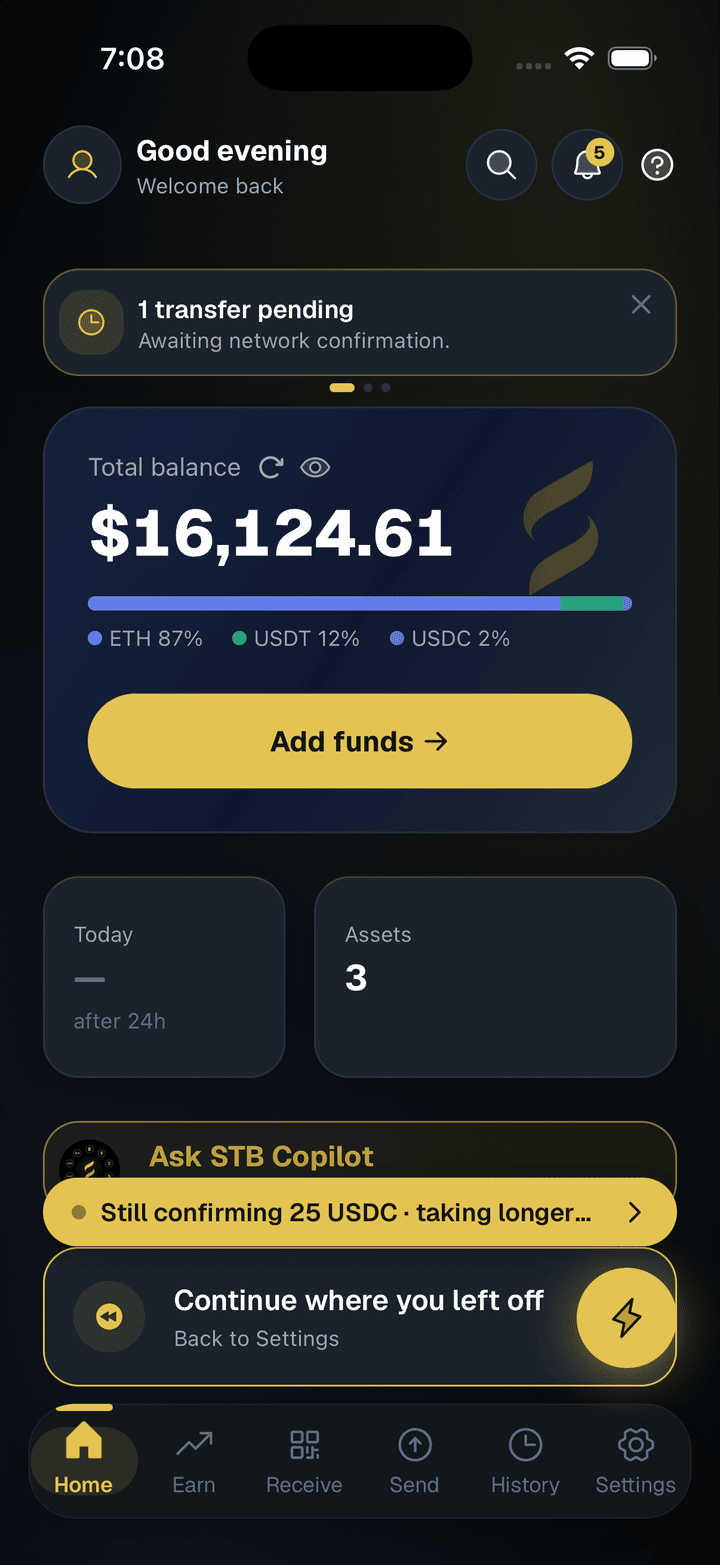
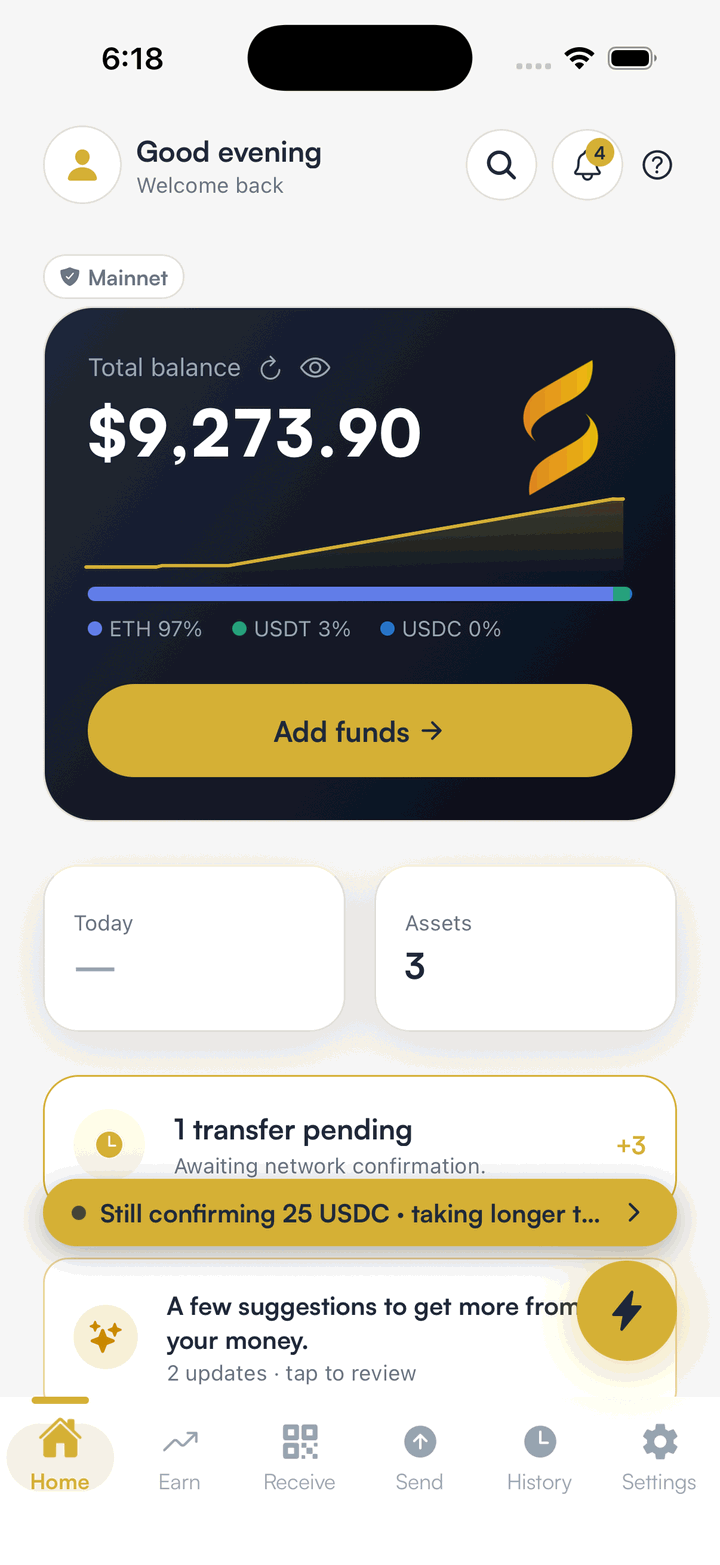



Supported assets
Every asset, and what you can do with it
Search or filter by capability, verified against the wallet’s coin registry.
Questions & answers
Multi-chain wallet: common questions
Which coins and blockchains does the SpendTheBits wallet support?+
One BIP-39 seed derives addresses for Bitcoin, Litecoin, Ethereum, BNB Chain, Polygon, Avalanche, Solana, XRP, TRON and Flare, plus the USDC and USDT stablecoins (USDT on both Ethereum and TRON) and Flare's FXRP. Polkadot (DOT) is display-only. Every address is derived on your device.
Does the wallet support Bitcoin Lightning?+
Yes, non-custodially: a Lightning node runs on your phone, initialized from your own seed. You can pay invoices and Lightning addresses and receive at your own @handle Lightning address, there is no server node and no channel we control.
What stops a scam token from showing up as real money?+
Only verified token contracts count as funds. Inbound transfers from unverified contracts are quarantined and flagged, never priced into your balance, and you can hide them entirely.
Can I send crypto to a username instead of an address?+
Yes. You can send to a normal on-chain address or to a human-readable @handle. Every recipient is risk-screened before the send is prepared.
Does SpendTheBits ever hold my private keys?+
No. The seed phrase and private keys are generated and stored only on your device, in the OS keychain. The backend only sees public data like addresses and extended public keys.
Further reading
Insights and press on multi-chain wallet
- XRPL trust lines explained: what holding RLUSD takes
Understand how XRPL trust lines work, why the XRP Ledger requires reserves, and what this means for holding the new RLUSD stablecoin.
- Is USDC Safe to Hold in 2026? Reserves, Law and the Depeg Record
Is USDC safe? What backs it, what the GENIUS Act now requires, how low it fell in March 2023, and why self-custody removes one of its two risks but not both.
- Exchange Collapse: What Actually Happens to Your Crypto
What an exchange collapse does to your coins: unsecured creditor status, the petition-date price freeze and the years-long wait, with FTX, Celsius and Mt. Gox.
- Native vs Bridged USDC: Why CCTP Changes the Risk
Native vs bridged USDC explained: bridged USDC is an IOU on a bridge contract, native USDC is minted by Circle. How CCTP burn-and-mint removes the lockbox.
- RLUSD vs USDC on the XRP Ledger: Trust Lines Explained
RLUSD vs USDC on the XRP Ledger: both are issued tokens, so each needs a trust line and locks 0.2 XRP of reserve. Here is what actually differs.
- What is FXRP? XRP on Flare through FAssets
Learn how FXRP bridges XRP to Flare trustlessly using the FAssets system, and explore how to mint, redeem, and hold it securely.
- Crypto spending limits and allowlists in a self-custody wallet
Learn how Crypto spending limits, address allowlists, and quiet hours protect your self-custody wallet from phishing and device theft.