
Why most Lightning wallets quietly take custody
Running Lightning properly means managing a node, channels, and liquidity — historically painful on a phone. Custodial wallets remove the pain by removing your ownership: they run one big node, and your 'balance' is a row in their database. Fast, simple, and precisely the arrangement Bitcoin was invented to end.
The industry's middle ground is the self-custodial embedded node: modern SDKs run a real Lightning node on the phone itself, with liquidity handled by service providers, so the keys stay yours while the UX stays simple. This is the model SpendTheBits uses — the node runs on your device, initialized from the same seed as the rest of your wallet, with no server node or channel we control.
The checklist for a real Lightning wallet
Four questions expose any Lightning wallet's true model. Who holds the keys — is the Lightning balance derived from your seed, or an entry in someone's ledger? Can you receive at a Lightning address — a human-readable name like an email that anyone can pay? What happens if the company disappears — do funds survive on-chain under your keys? And is Lightning integrated with the rest of your money, or a separate silo with its own backup?
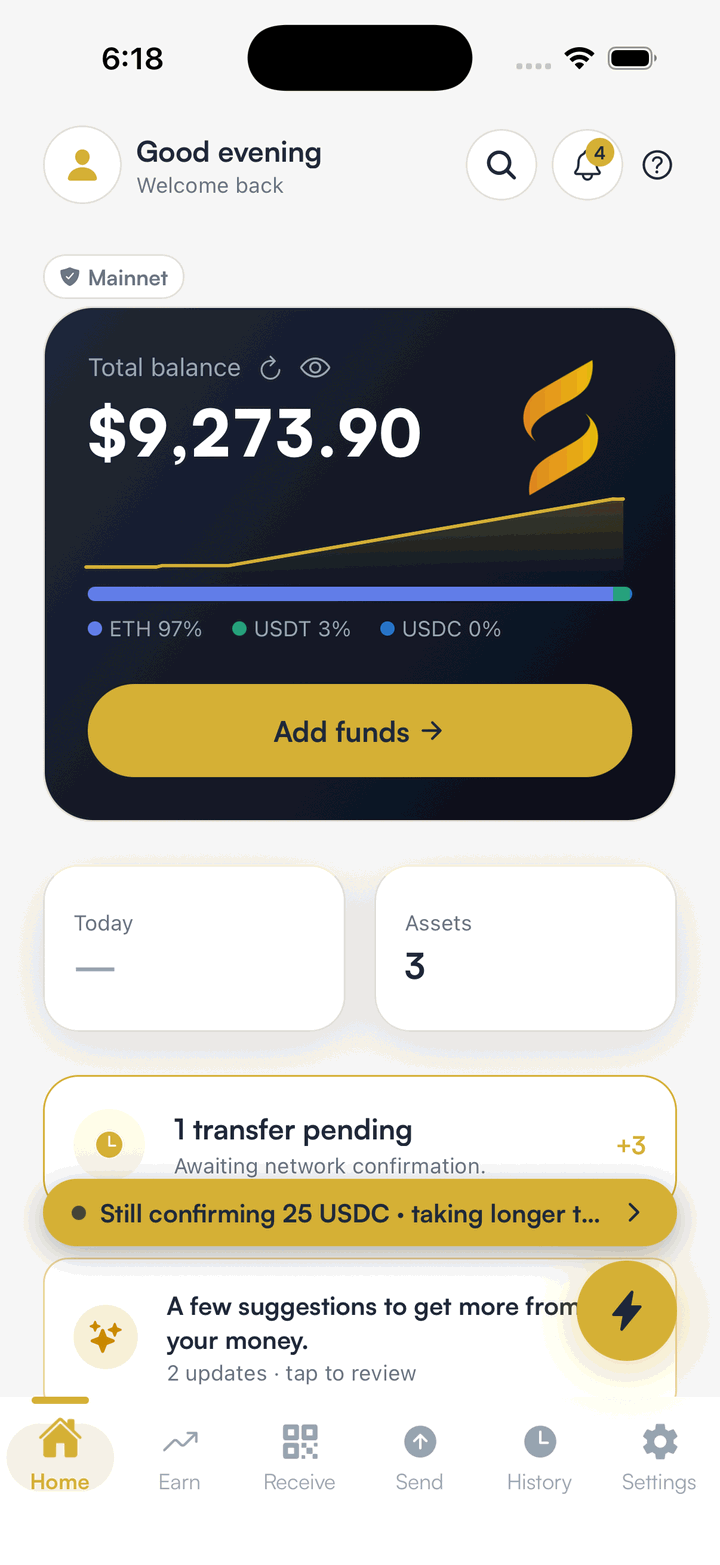
SpendTheBits answers all four the self-custody way: node from your seed, your @handle doubles as your Lightning address, funds survive us, and Lightning lives alongside 13 other chains in the same app — same recovery, same guardrails, same one-tap freeze.
Paying and getting paid, in practice
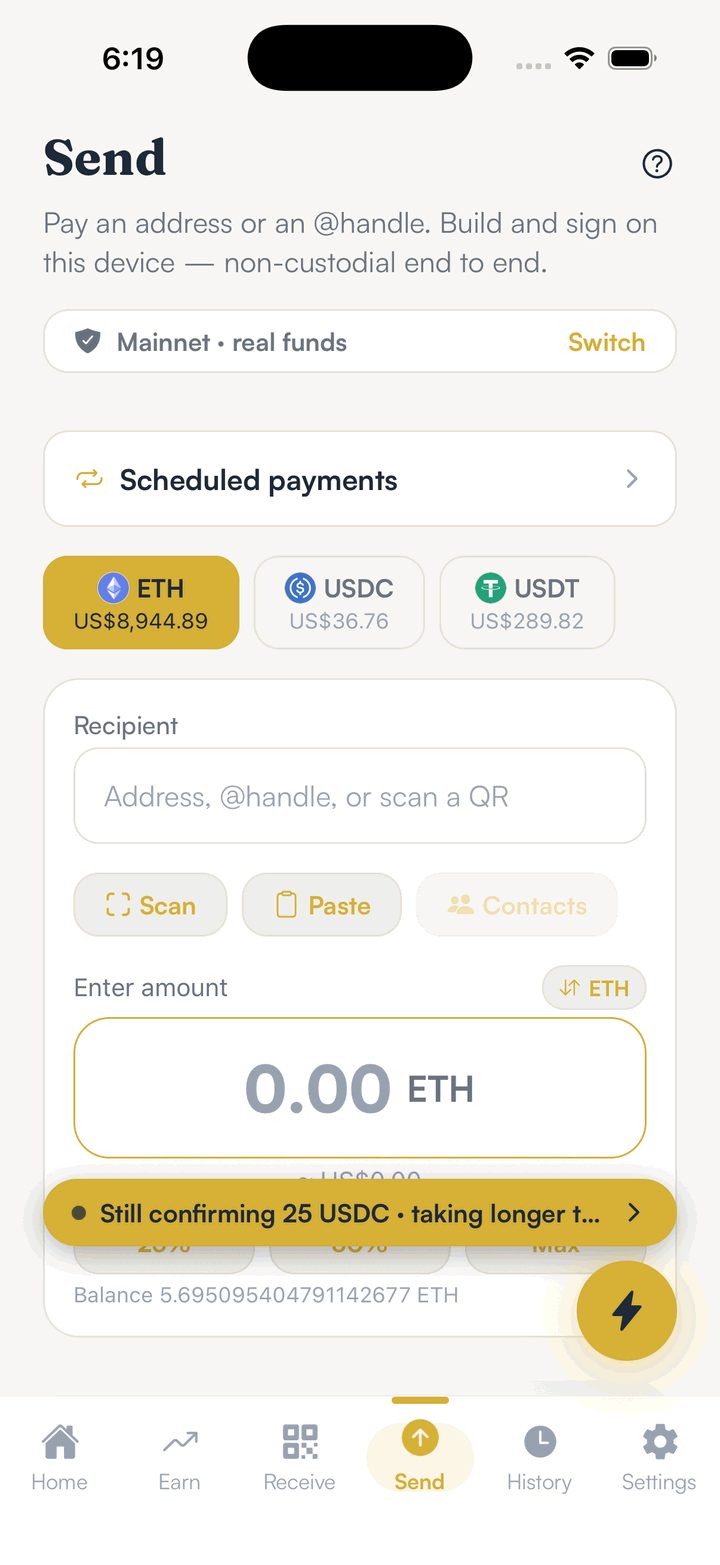
Day to day, Lightning in SpendTheBits is just the fast lane of the same Send flow: paste an invoice or pay a Lightning address, and when you send Bitcoin the app routes L1 or Lightning as appropriate. Fees are network-level — fractions of a cent in most cases — and settlement is near-instant.
Receiving is where the @handle shines: give clients or friends @yourname instead of a 300-character invoice. It resolves for Lightning payments and for every other chain the app supports, which makes it a practical account number for a freelancer getting paid from anywhere.
The verdict for 2026
If you're choosing a Lightning wallet this year, sort the market by custody first: pure custodial apps (fast, but it isn't your Bitcoin), dedicated self-custodial Lightning wallets (real ownership, but Lightning-only silos), and multi-chain wallets with an embedded node.
SpendTheBits makes the case for the third category: genuine on-device Lightning inside the same non-custodial app that holds your Ethereum, Solana, XRP, and stablecoins — with social recovery and inheritance covering the seed that backs all of it. Instant Bitcoin shouldn't cost you ownership of it.
Ready to hold your own keys?
SpendTheBits is a fully non-custodial wallet for 13 chains, free on iOS and Android.