

The three-lot example we will use
Our example founder buys the same asset three times across a year. In January our founder buys 1 ETH at $2,000. In March they buy 1 ETH at $3,500, and in June 1 ETH at $2,800, so our founder now holds 3 ETH with a total cost of $8,300.
In September our founder disposes of 1 ETH at $3,000 to pay a contractor. One asset, three lots, one partial disposal. The only open question is which purchase price gets subtracted from the $3,000, and that is exactly what FIFO vs HIFO decides in our example.
FIFO: oldest lot out first, a $1,000 gain
FIFO stands for first in, first out. It assumes the unit you dispose of is the oldest unit you hold. In our example that is the January lot bought at $2,000, so our founder's proceeds of $3,000 minus a cost of $2,000 give a realised gain of $1,000.
After the sale our founder still holds the March and June lots, with a combined cost of $6,300, and that basis stays on the books for the next disposal. Nothing about the FIFO choice is lost. It is simply the high-cost lots that remain.
FIFO is also the default. The IRS FAQ says that if you do not identify specific units, they are treated as disposed of in chronological order, starting with the earliest unit you acquired [1]. A filer who keeps no lot-level records is on FIFO whether they chose it or not. One more thing matters in the FIFO vs HIFO comparison: the holding period travels with the lot, and the oldest lot is the one most likely to have crossed the long-term line.
HIFO: highest-cost lot out first, a $500 loss
HIFO stands for highest in, first out. It assumes the unit you dispose of is the one you paid the most for. In our example that is the March lot bought at $3,500, so our founder's proceeds of $3,000 minus a cost of $3,500 give a realised loss of $500.
Same sale, same cash in the bank, and our founder's reported result moved from a $1,000 gain to a $500 loss. That is the $1,500 swing in our headline. No rule was bent. The founder simply pointed at a different unit.
Be precise about what HIFO is, because the IRS never uses the word. What the FAQ allows is specific identification: you may identify the units you dispose of by their unique digital identifier, such as a key or address, or by records showing the transaction details for all units of that asset [1]. HIFO is specific identification with a policy attached: always point at the costliest unit.
The records that make it stick are spelled out. You need the date and time each unit was acquired, its basis and fair market value at that time, the date and time it was disposed of, and the value received [1]. No records, no specific identification, and you fall back to FIFO [1].
HIFO defers tax, it does not delete it
Look at what each method leaves behind. Under FIFO our founder still holds lots costing $6,300, and under HIFO lots costing $4,800. The $1,500 that HIFO removed from this year's gain in our example is sitting in that lower remaining basis, waiting for the next disposal.
So the honest framing of FIFO vs HIFO is timing. HIFO pulls the low-gain lots forward and pushes the high-gain lots back. In a loss-making year that can be the wrong move, because a gain recognised now might be sheltered for free. In a profitable year, deferral has real cash value. The method should follow the year, and your accountant should choose it.
This is also why a reserve matters more than a method. Whichever lot you pick, the bill arrives eventually. We built an auto tax-reserve into Earn for this reason: it ring-fences a share of taxable inflows into a savings goal as they land, so the money for the bill is set aside early.
United States: specific identification, now wallet by wallet
The US position has two layers. The first is the FAQ: specific identification is allowed if you can identify the units, and FIFO applies if you cannot [1]. That has been the practical basis for HIFO for years.
The second layer is newer. The final regulations under section 1.1012-1(j) apply to all acquisitions and disposals of digital assets on or after January 1, 2025, and they apply the specific identification and FIFO rules to units held within a single wallet or account [2]. Before that, many filers ran one universal pool across every wallet. Rev. Proc. 2024-28 lets those filers make a reasonable allocation of unused basis to each wallet or account as of that date [2]. The IRS digital-assets page describes it the same way [3].
Two details bite founders. The identification must be made on your books and records no later than the date and time of the disposal, by an identifier such as purchase date or price that fixes the basis and holding period [2]. And for units in an unhosted wallet, the fallback when you do not identify is chronological order within that wallet [2]. In plain terms: you cannot pick the lot after the fact, and you cannot borrow a high-cost lot from a different wallet.
For a treasury spread across several addresses and chains, each wallet is its own pool, so a HIFO pick only reaches the lots in the wallet that sent the funds. How your addresses map onto the regulation's idea of a wallet is a question for your accountant, and worth asking before year end.
Canada: average cost, so HIFO is not on the menu
Canada takes the FIFO vs HIFO choice away. The CRA's guidance for crypto-asset users says the adjusted cost base is usually the weighted average cost of a crypto-asset [4]. The rule behind that is the identical-properties rule in Guide T4037: when you buy and sell the same type of property over time, you calculate the average cost of each unit at the time of each purchase [5]. Neither FIFO nor HIFO is an option for a capital gain.
Run our example through it. Our founder's total cost of $8,300 across 3 ETH gives an adjusted cost base of about $2,767 per unit, so proceeds of $3,000 give a capital gain of about $233 on our sale. Half of a capital gain is included in income as a taxable capital gain [4], so our founder reports about $117. In our example the remaining 2 ETH keep that average cost until the next purchase moves it.
Canada's answer sits between the two US answers in our example, and it is the only one a Canadian founder can use. A Canadian treasury needs a clean running average, per asset, in Canadian dollars, and a clear view of whether the activity is capital or business. The CRA says that if a crypto-asset transaction is not made on account of business income, it is generally considered capital in nature [6], and business treatment changes the whole calculation.
How CFO Books produces the lots either way
SpendTheBits is a fully non-custodial wallet, so every address you hold derives from one seed that only your phone knows. The ledger itself is public. CFO Books reads that public activity and rebuilds cost-basis lots under FIFO or HIFO, then produces realised and unrealised P&L, a board-ready treasury statement, and a general-journal CSV that imports into QuickBooks or Xero. The steps are in the help centre under exporting crypto transactions for taxes.
For a US founder the lot-level output is the substance of specific identification: acquisition date and time, cost, disposal date and time, and value received, per unit, per wallet. For a Canadian founder the same export is the raw material an accountant pools into an average cost. CFO Books does not settle FIFO vs HIFO for you, and it should not. It makes both answers auditable.
If your treasury runs on stablecoins rather than volatile assets, start with how to self-custody stablecoins and the founders and treasuries walkthrough. A dollar-pegged asset has far fewer cost-basis events.
Pick a method with your accountant, stay consistent across periods, keep the records the rules demand, and fund the reserve as you go. FIFO vs HIFO is real money in the year you decide it, but it is a decision about when, not whether.
In the app · 5 steps
Produce a FIFO or HIFO export in SpendTheBits
The cost-basis method is a setting, not a spreadsheet. The lots come from your own on-chain history.
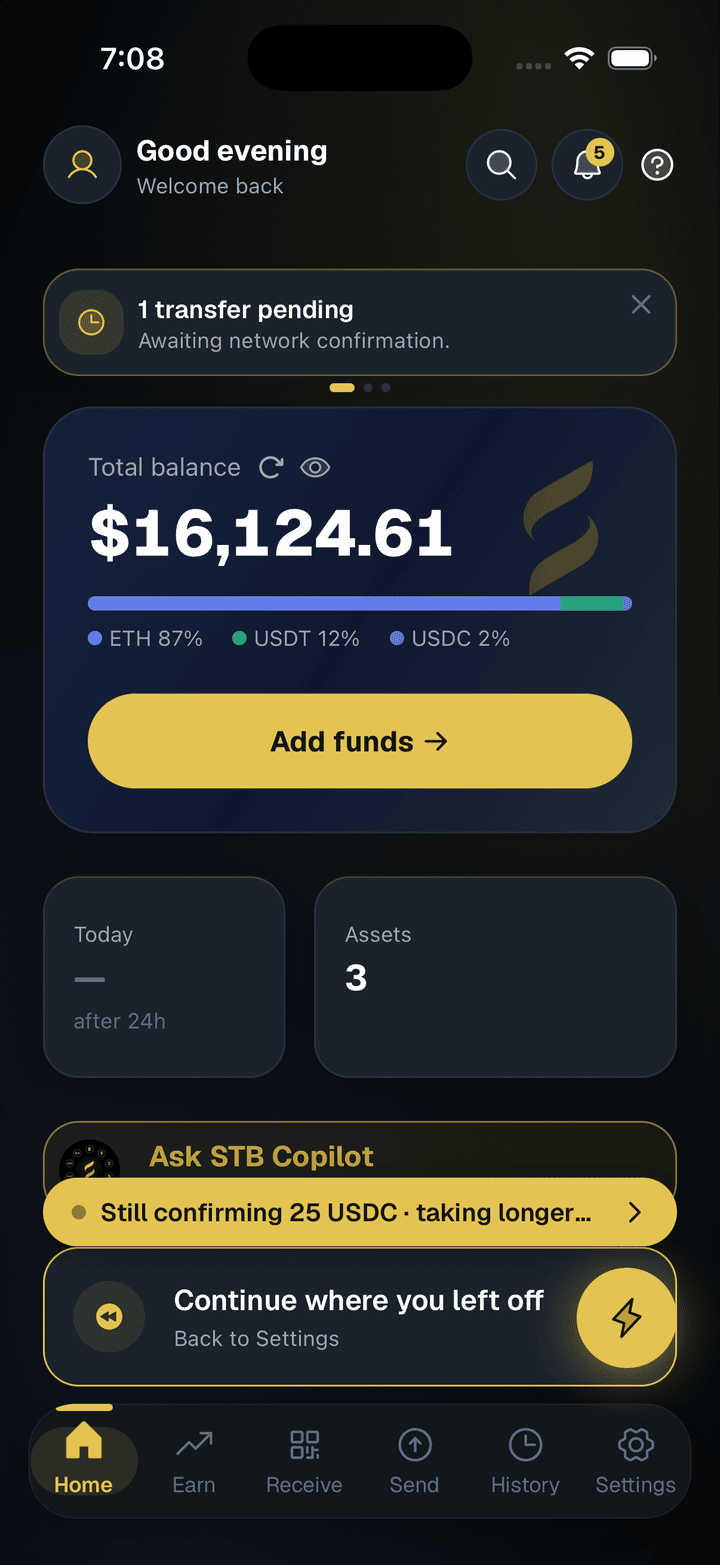
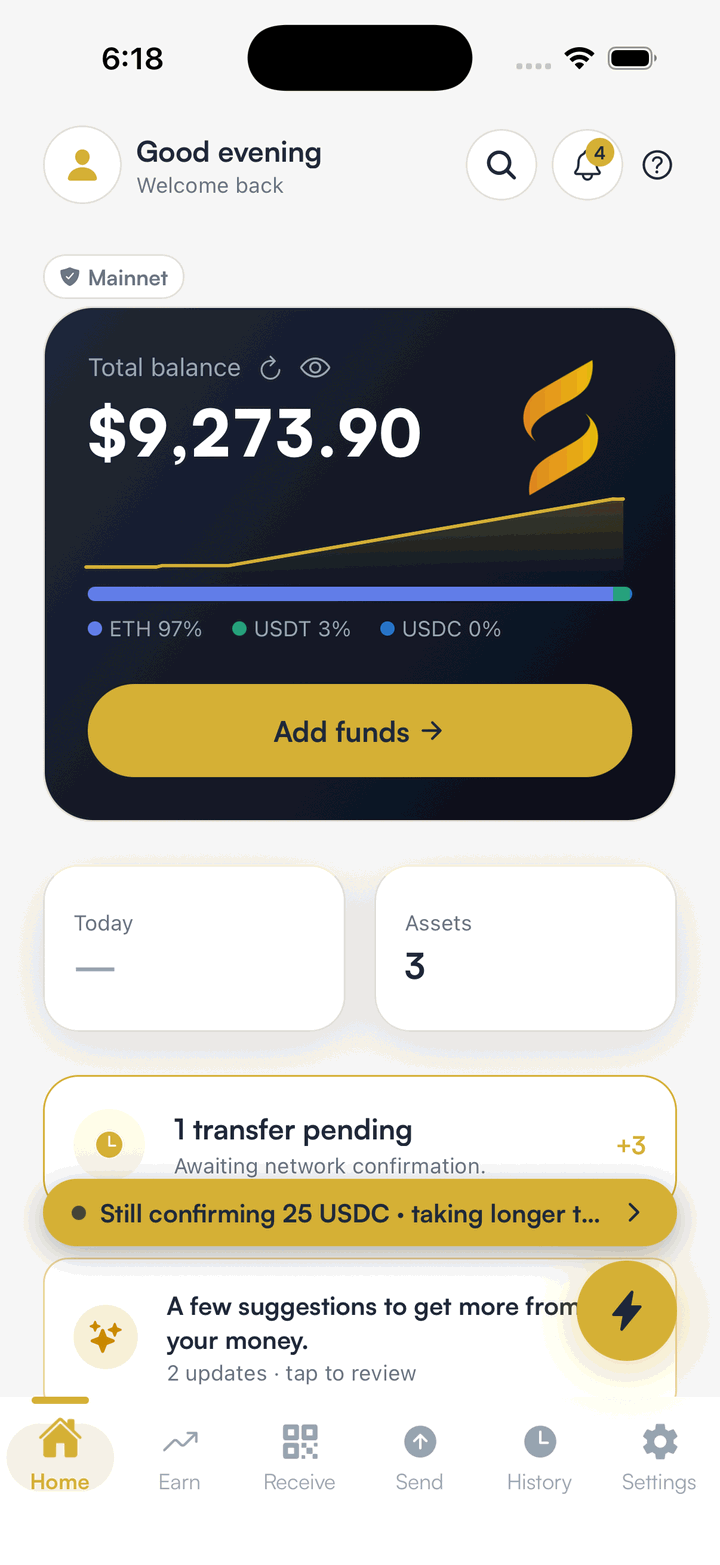
Know what you hold
Home shows every asset you hold today. That is the unrealized side of the P&L, and any sale from it is where FIFO and HIFO give different answers.
Check that the history is complete
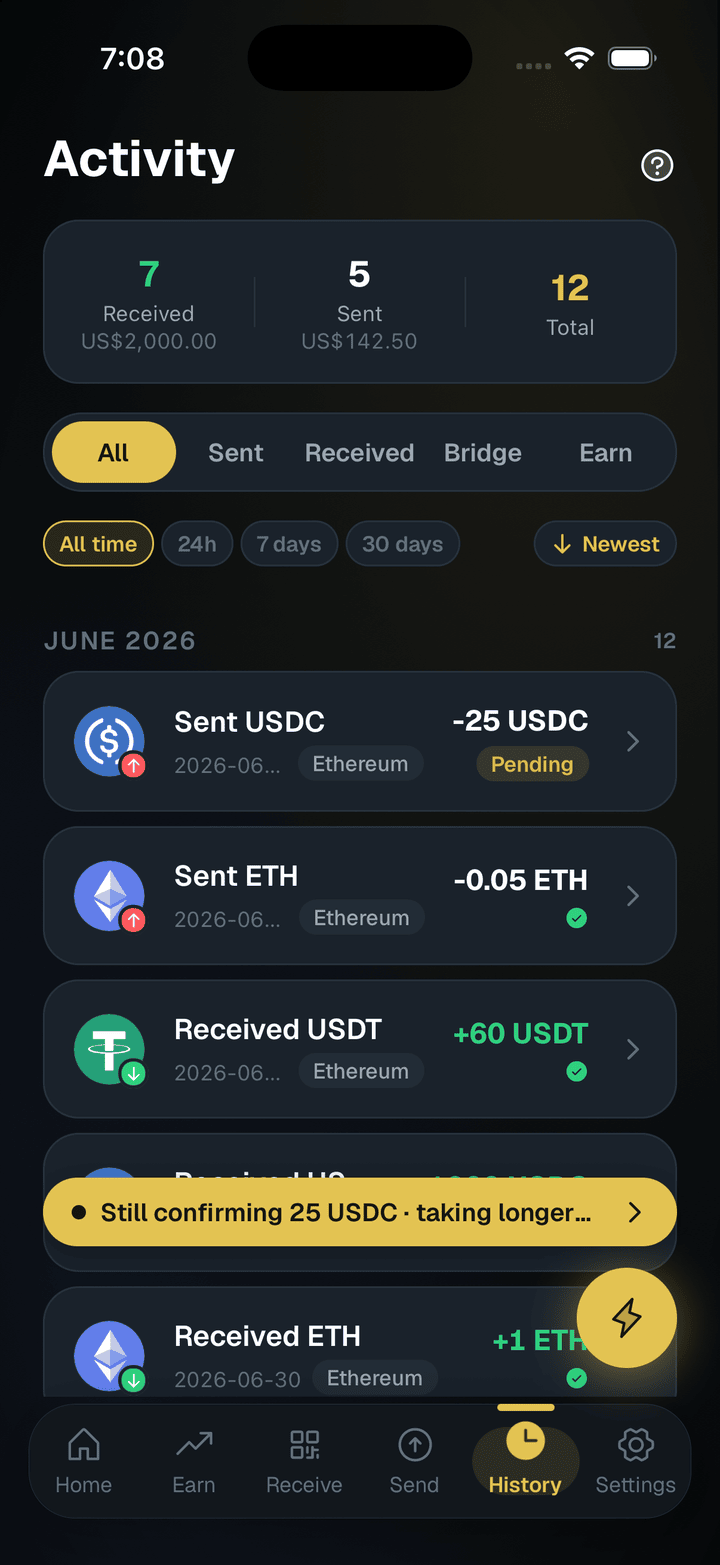
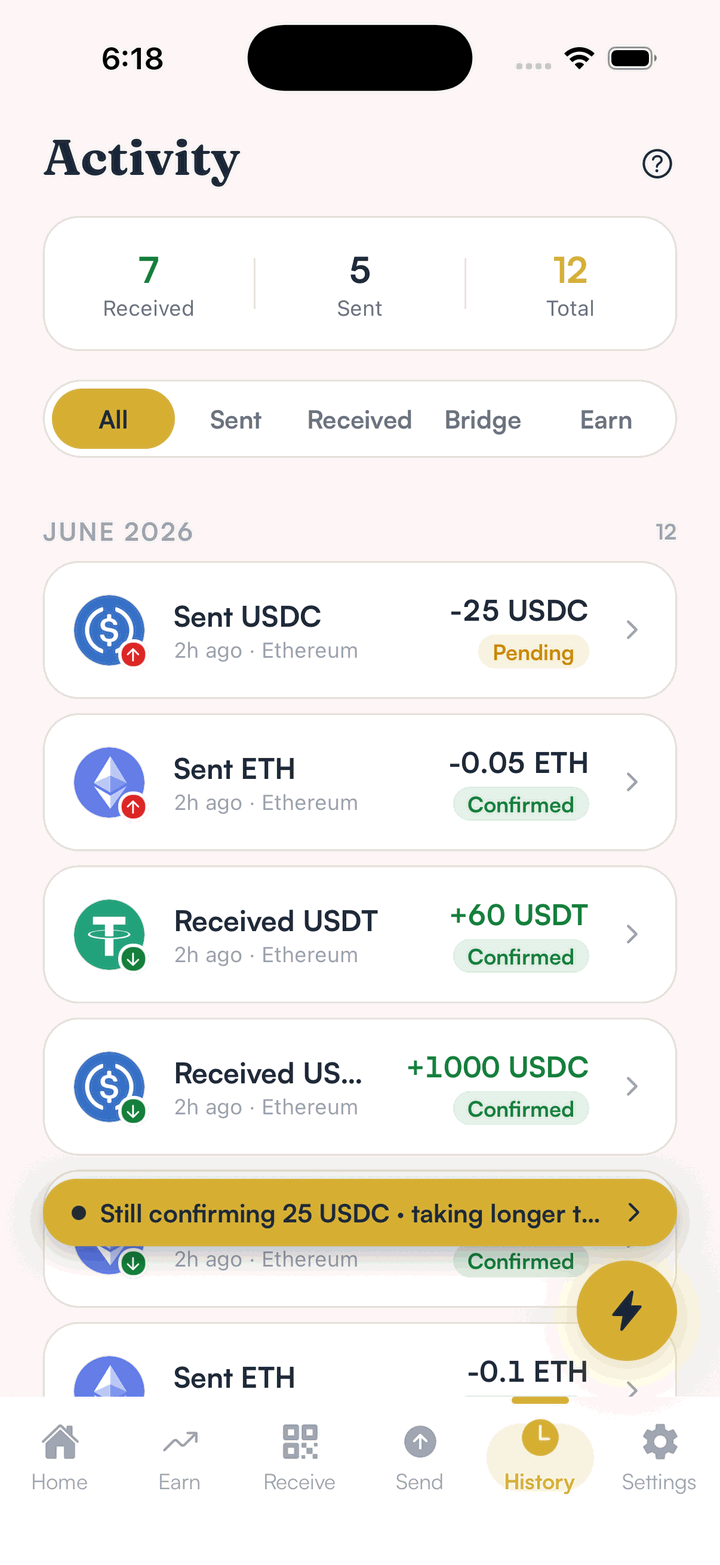
Every send, receive, bridge and Earn move is a row in Activity. A missing deposit is the most common cause of a wrong basis, so check it here first.
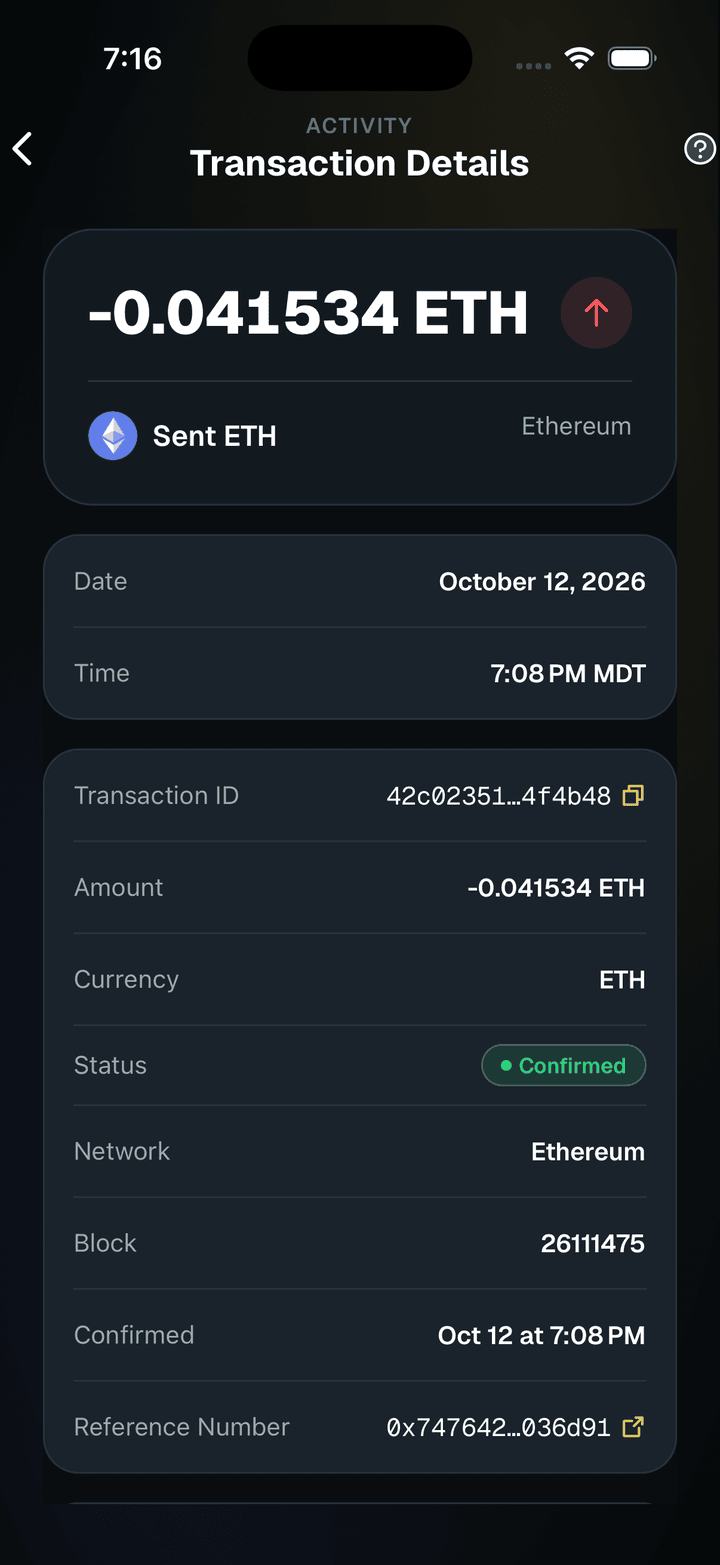
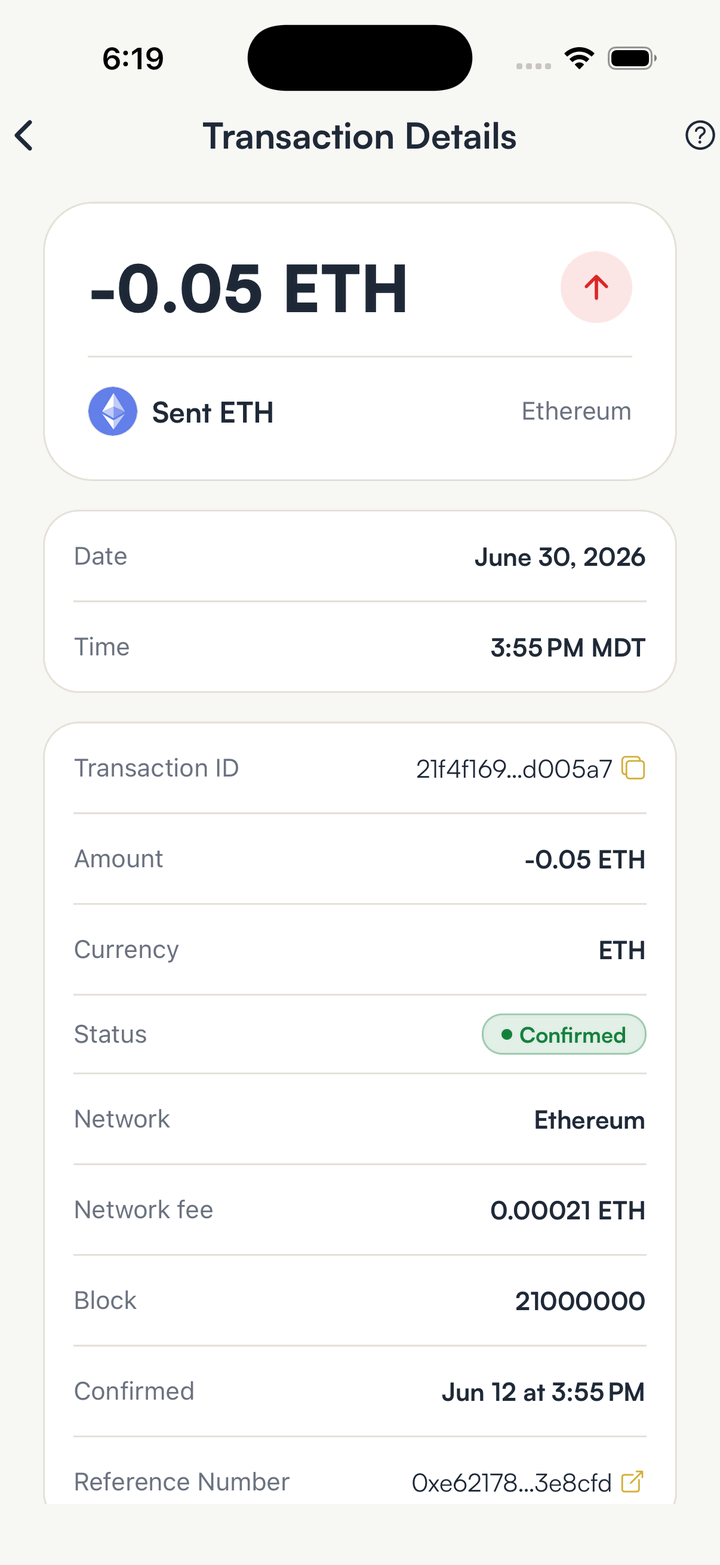
Check a transaction's details
Open any row to see the date, the time, the amount and the network fee. Those are the inputs each tax lot is built from.
Open CFO Books and pick the method
Choose FIFO or HIFO, set the reporting period and review realized and unrealized P&L before exporting. Stay consistent across periods and check what your jurisdiction allows.
Export the journal
Download the general-journal CSV and import it into QuickBooks or Xero. The auto tax-reserve can set aside part of each taxable inflow in an Earn savings goal.
Hold your own keys, keep the yield, skip the middleman.
SpendTheBits is a fully non-custodial wallet for 13 chains, free on iOS and Android.