
Two designs, two places the risk lives
Aave v3 is one shared pool per asset [1]. You supply USDC and receive aUSDC, an interest-bearing token whose balance grows as borrowers pay interest [1]. Every USDC supplier on that deployment shares one pot of liquidity and one set of governance parameters. You get depth and a long record. You do not get to choose the borrowers or their collateral.
Morpho splits that into layers. At the bottom are Morpho Markets, each pairing one collateral asset with one loan asset, with a fixed oracle, a fixed liquidation loan-to-value, and a fixed rate model [5]. Each market is isolated, so a bad collateral in one market cannot drain another [5]. Once created, a market's rules never change [5].
On top sit Morpho Vaults. A vault takes your USDC and spreads it across a list of markets chosen by a curator [9]. The vault is a standard ERC-4626 tokenized vault [7]. That is why the Aave vs Morpho question is really pool versus curator. On Aave governance decides for everyone. On Morpho a named team decides for one vault.
Reading an Aave v3 market: utilisation, caps, isolation mode
Start with utilisation, the share of supplied USDC that is currently borrowed. Aave's rate model has two slopes around an optimal utilisation point: below it, borrow rates climb gently; above it, they climb steeply [1]. Rates track utilisation on purpose, so enough liquidity stays in the pool for withdrawals and liquidations [2]. A high supply rate is therefore a symptom of a pool that is close to fully lent out.
That matters because withdrawals come from unborrowed liquidity [1]. When you redeem aUSDC, the protocol pays you from what is not lent out [1]. At very high utilisation your yield looks great and your exit gets thin at the same moment. Read the spike as a warning, not a bonus.
Then read the caps, which limit the total amount of a token that can be supplied and borrowed from a reserve [2]. Once the supply cap is reached, no more liquidity for that asset can be supplied [3]. Once the borrow cap is reached, no new borrow positions can open [3]. A cap of zero means no limit is in effect [3]. A USDC reserve near its supply cap is one governance is deliberately holding back [2].
Isolation mode is the third dial. An asset listed in isolation mode can only be used as collateral to borrow specific stablecoins approved by governance, up to a debt ceiling, and the borrower cannot enable other collateral at the same time [4]. For a USDC supplier that is good news: riskier collateral is walled off, and the debt ceiling is your exposure to it [4].
Reading a Morpho vault: the curator is the product
A Morpho vault has no pooled governance to lean on. It has roles. In Vault V1 the owner controls the vault, the curator manages market risk, allocators move funds between the approved markets and the idle balance, and a guardian can veto pending changes [6]. The curator decides which markets the vault may supply to and sets a supply cap for each one [6]. Raising a cap is time-locked; lowering one is immediate [6][7].
Vault V2 keeps the idea and generalises it [8]. Curators set caps against abstract risk identifiers, so one cap can bound all exposure to a collateral type across many markets [8]. There is a sentinel role that can reduce risk immediately by deallocating or cutting caps, and nearly every significant curator action sits behind a timelock [8][9]. The timelock is your exit window: if a curator proposes something you dislike, you can leave before it executes [9].
So the Aave vs Morpho reading changes shape. On Aave you read parameters. On Morpho you read people. Who is the curator? How long have they run vaults? What is in the book today? Morpho's own docs say curators abstract risk decisions away from depositors and that their choices directly affect vault security [9]. You are delegating risk work to a named team.
Liquidity risk: can you get out this afternoon?
Aave vs Morpho share one hard truth here. A lender can only withdraw if the market has the liquidity to pay them. Aave says withdrawals are subject to available unborrowed liquidity [1]. Morpho says lenders can withdraw their supplied assets and interest provided there is enough liquidity in the market [5]. Neither protocol promises an instant exit at full size on a bad day.
Morpho vaults add machinery around this. V1 keeps a withdraw queue that the allocator orders, so redemptions are served from markets in a chosen priority [6]. V2 lets the allocator designate a highly liquid adapter as the liquidity adapter, which the vault pulls from when idle assets cannot cover a withdrawal [8]. A V2 depositor can also force-deallocate, or exit into a direct position in the underlying market [8]. Learn those escape hatches before you need them.
This is why we built Earn to unwind only the exact shortfall just-in-time when you send. That only works if the venue has liquidity when we ask. So for us depth decides whether a payment goes out on time. For a treasury paying salaries from Earn, it is the first line on the Aave vs Morpho checklist, not the last.
The five-point checklist behind our Yield Safety Score
Our score is a 0 to 100 rating of a venue's risk, not its return. It is deterministic and shows its factors, so you can see why a vault scored what it did. The weights are ours and can change; the inputs are what you can reuse. Here they are as a checklist you can apply to Aave vs Morpho, or to any venue.
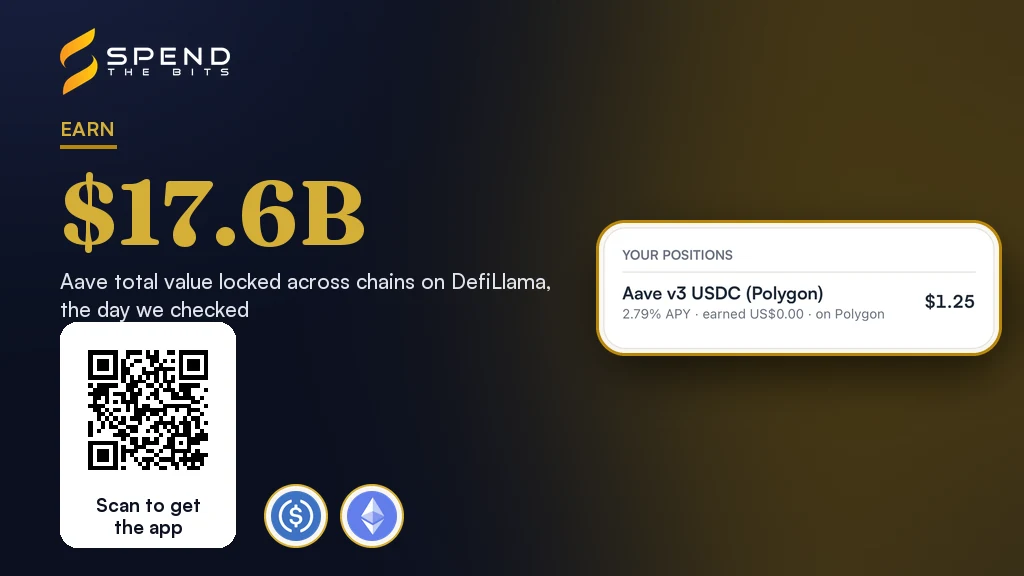
One: protocol track record. How long has the code run at size, and how many exploit or depeg incidents has it had? We dock heavily per incident; a second one tells you more than the first. Two: depth of value locked. Deeper liquidity is harder to break or run on, and JIT unwinds depend on it. Aave's total value locked sat at about $17.6 billion across chains, and Morpho's at about $9.5 billion, when we checked DefiLlama [10][11]. The number that matters, though, is the depth of the specific market or vault your USDC is in.
Three: audits, and how many reputable firms did them. Being audited at all is the gate; independent reviews add a little more. Four: the operator. For Aave that is governance and its cap settings. For Morpho it is the curator, their record, and what their book holds today. Five: observed versus advertised yield. We compute the rate shown in Earn from the vault's real share-price growth. When we captured the Earn screenshot above, the Aave v3 USDC market on Polygon showed an observed APY of about 2.79% in our production app. If a venue advertises far more than its share price delivered, ask where the gap comes from. Usually it is a token incentive that can stop, or a utilisation spike that is also an exit warning.
Read those five before the rate and Aave vs Morpho mostly answers itself for a given treasury. A pooled market with deep liquidity, conservative caps and a long record is the default for money you may need this afternoon. A curated vault with a strong operator and a clean book can earn more for money you can leave alone through a timelock.
What we do when the score breaches, and what Earn costs
A score is only useful if something happens when it moves. In SpendTheBits, Treasury Auto-Defense is a circuit breaker. If a venue's safety score breaches its threshold, it exits the position to liquid USDC and alerts you. It reuses the owner-signed session grant from auto-sweep, bounded on-chain to withdraw-to-owner only. Without a grant it degrades to alert-only. It can never move funds anywhere except back to you.
Earn stays non-custodial throughout. The position is yours on-chain, and every action, including the exit, is prepared by our backend and signed on your device. Our cut is a small share of the yield you earned, never principal, accrued while you earn and collected only when you withdraw, as a separate transfer you sign. The exact figure is on the in-app Fees screen before you confirm.
For the steps, how to earn yield on USDC covers the deposit flow and what the Yield Safety Score means explains the score card in the app. For a wider look at wallets offering USDC yield, see our guide to the best wallet for USDC yield, and for the treasury workflow around it, the founders and treasuries page. Aave vs Morpho is a fine debate. Just have it about risk.
In the app · 5 steps
Compare a vault before you deposit, in SpendTheBits
The questions above become four checks in the app. None of them needs a spreadsheet.
Open the Earn tab
Earn opens on USDC and shows what is spendable, what is already earning, your observed APY and the net rate after the SpendTheBits performance fee. That fee is taken from yield only, never from principal, and the app shows the exact figure before you deposit.
Read the Yield Safety Score before the rate
Every vault carries a 0–100 score for the venue's risk, not its return. A higher advertised rate with a lower score is usually the worse deal once you price the risk.
Match the vault's chain to your USDC
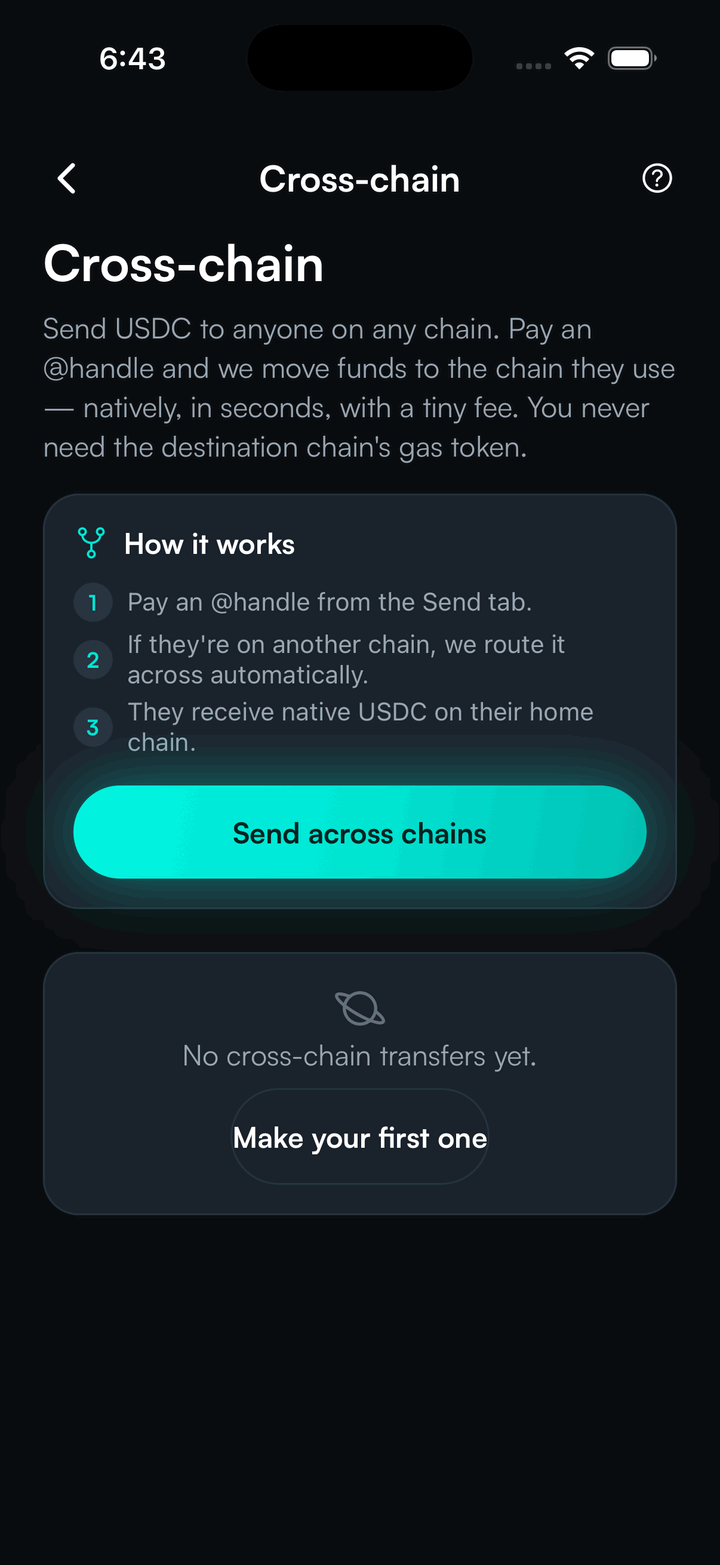
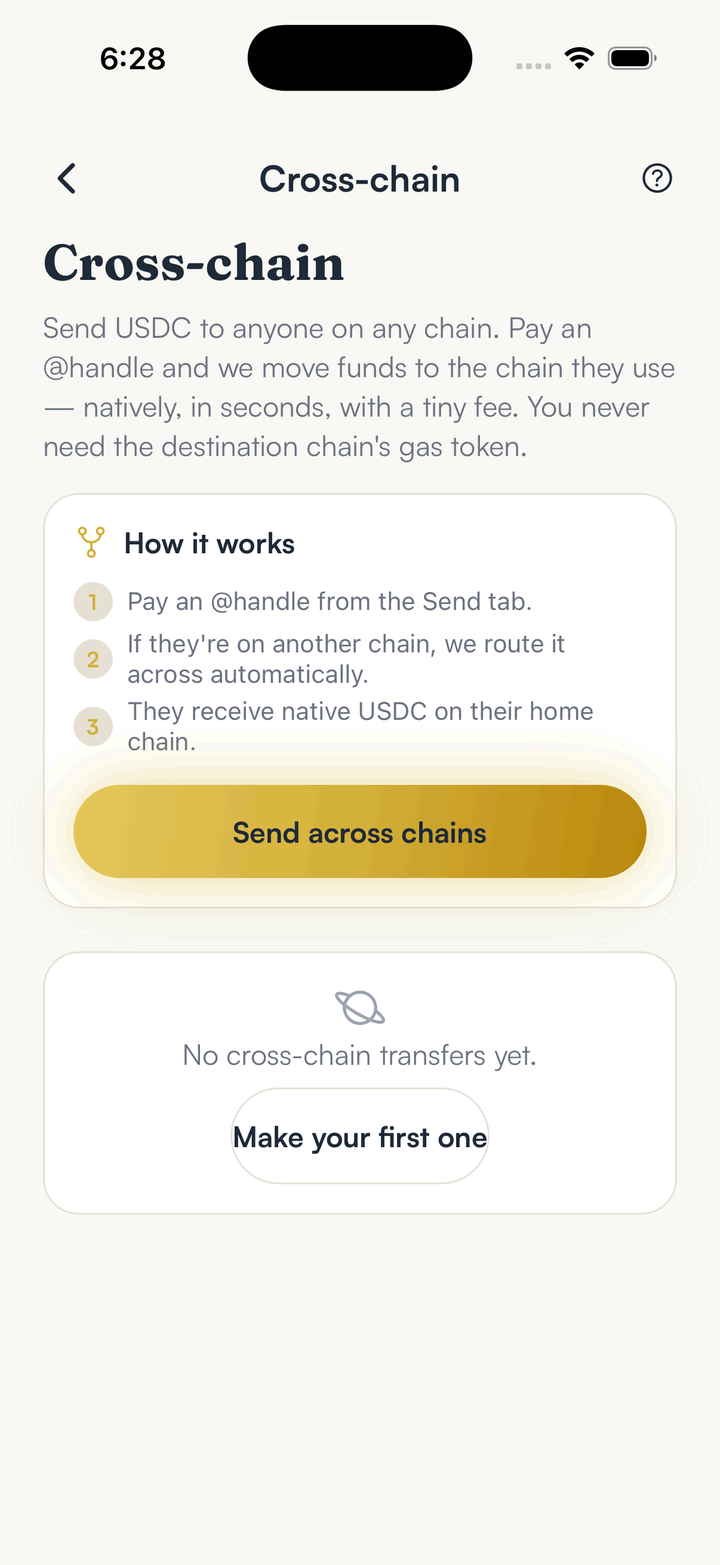
If your USDC sits on a different chain from the vault, the plan includes a bridge step and shows it to you first. You can also move it yourself from Cross-chain, which moves native USDC through Circle's CCTP.
Keep a spendable buffer, then sign
Enter the amount and leave enough outside the vault to cover gas. The app warns you when a deposit would leave too little. You sign the deposit on your own phone.
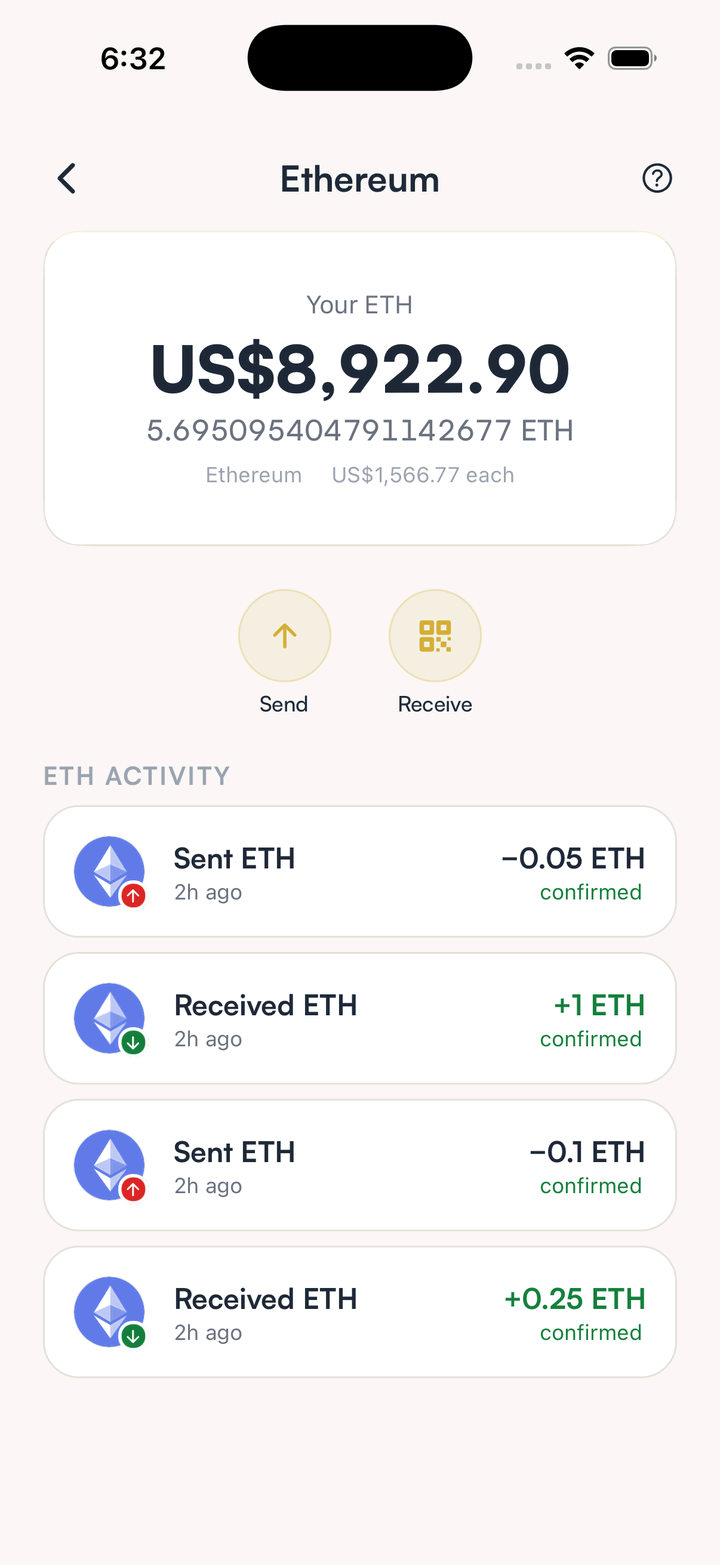
Watch the deposit land
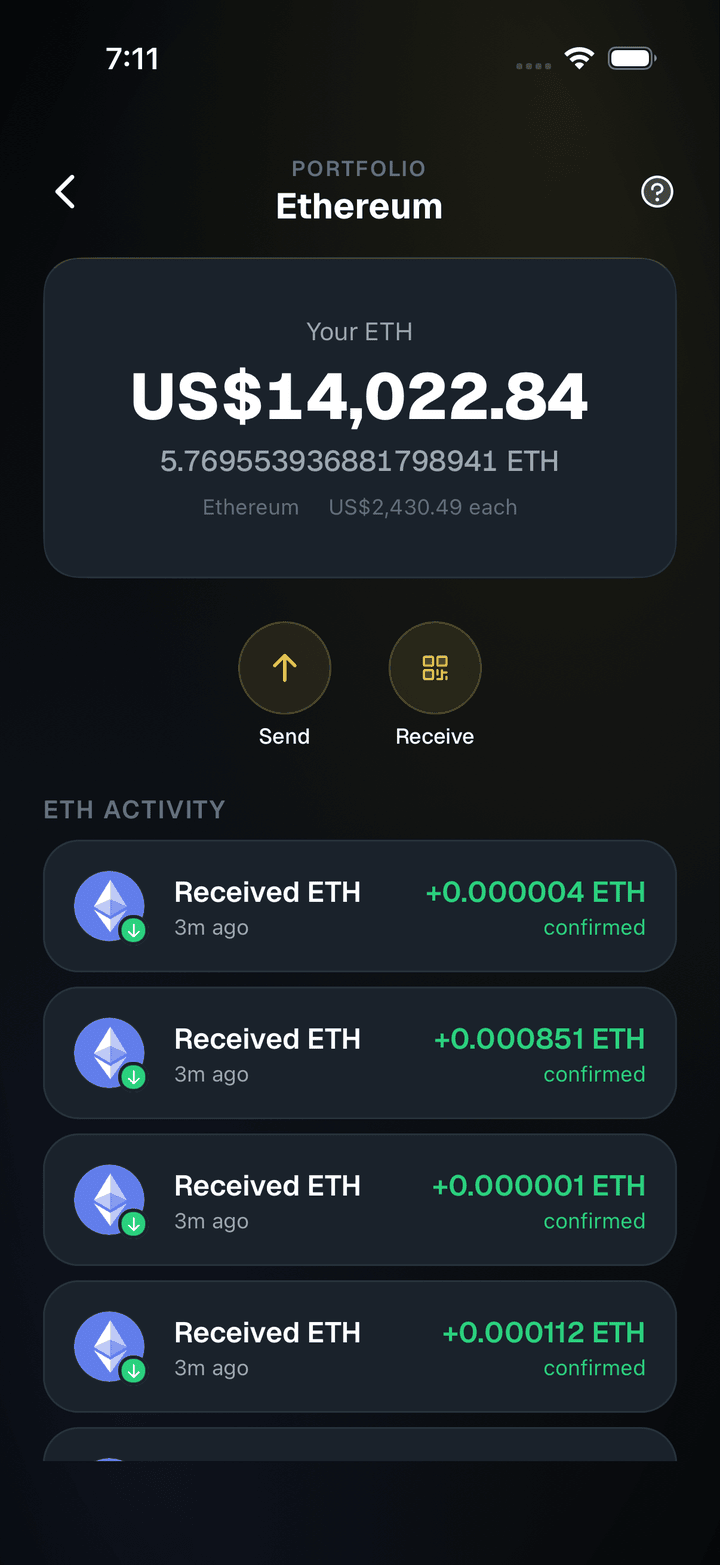
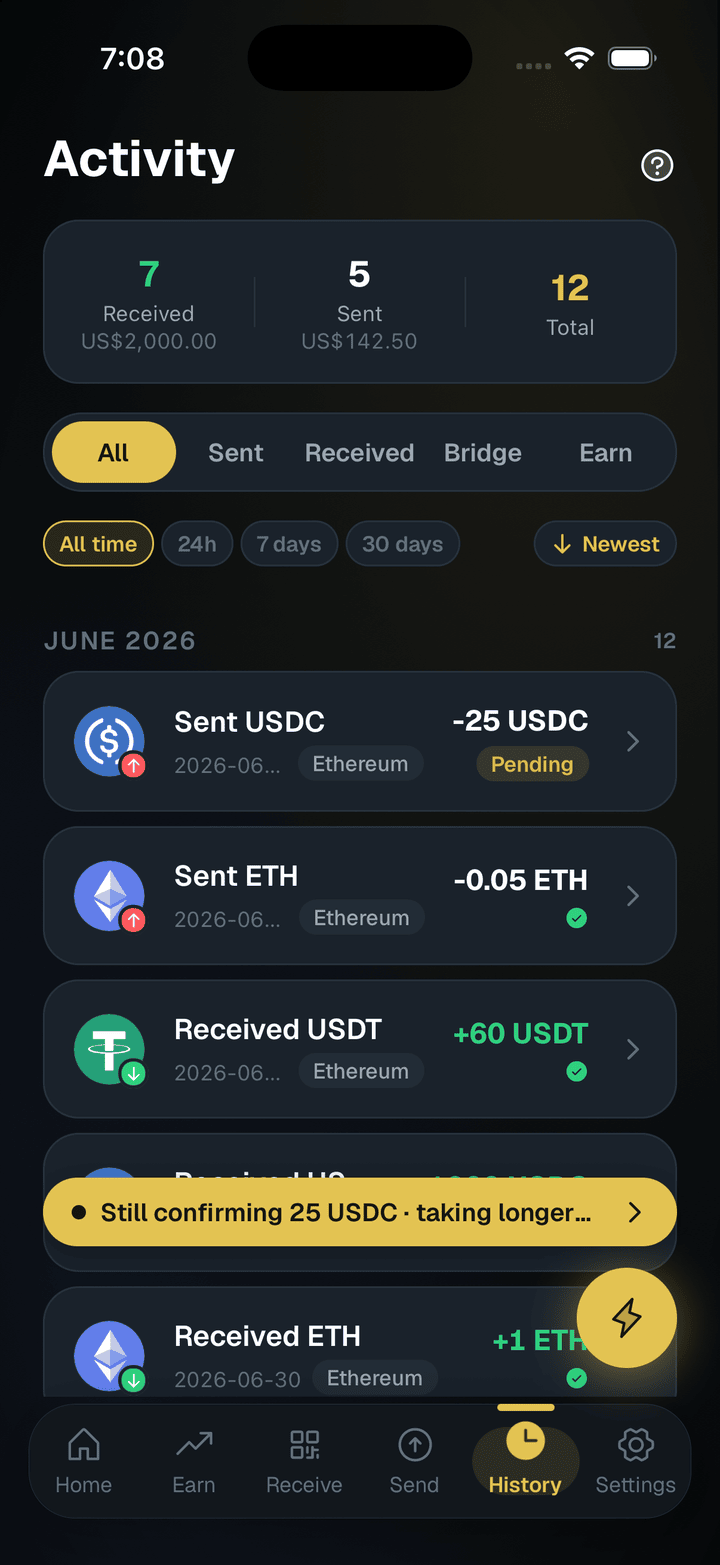
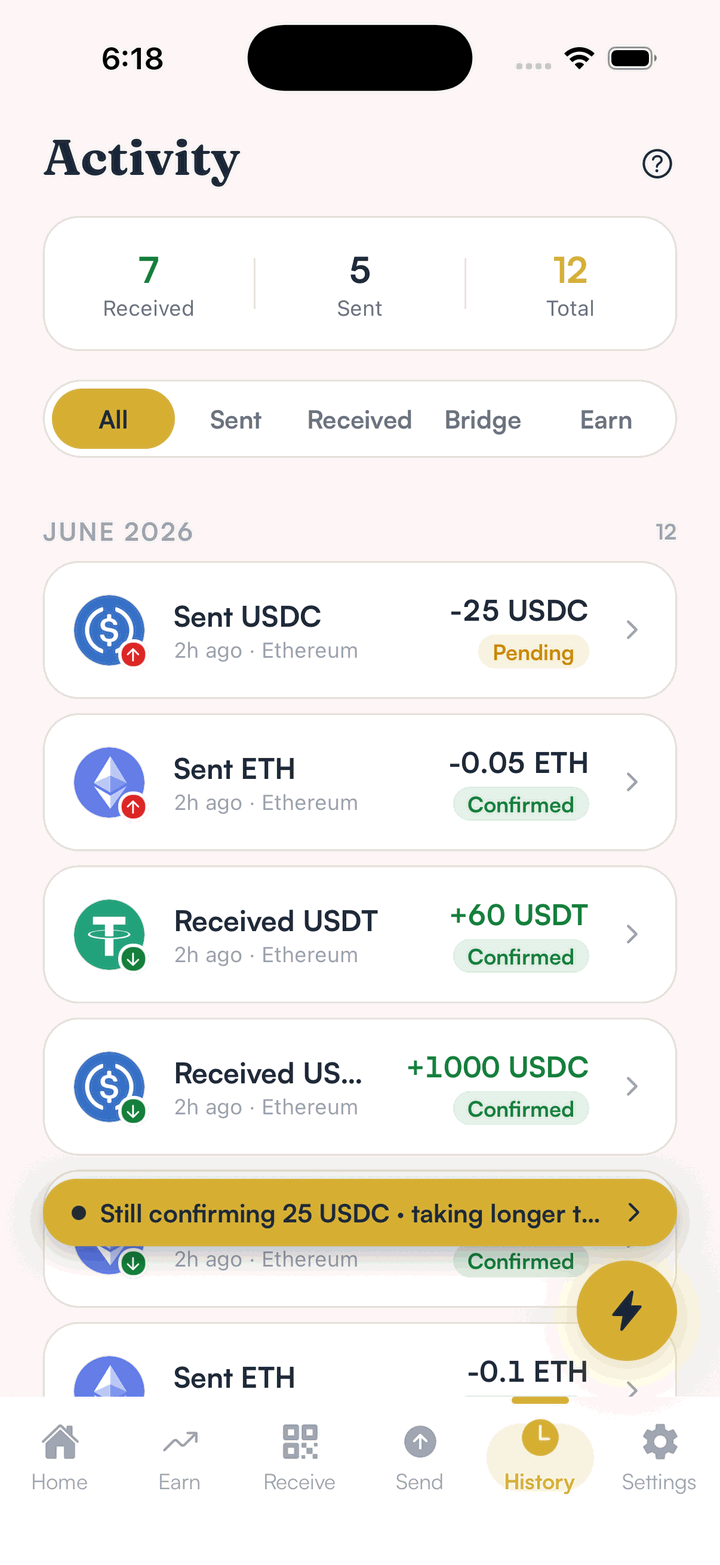
The deposit appears in Activity, under the Earn filter, and the position shows on the Earn screen once the chain confirms it.
Hold your own keys, keep the yield, skip the middleman.
SpendTheBits is a fully non-custodial wallet for 13 chains, free on iOS and Android.