
What "1:1 backed" means, and what it does not
USDC is a digital dollar issued by Circle. For each USDC in circulation, Circle holds at least one dollar of reserve assets. As of 31 August 2026 there were $73.3 billion USDC in circulation [4]. Most of it sits in the Circle Reserve Fund, an SEC-registered government money market fund holding short-dated US Treasuries, overnight Treasury repurchase agreements and cash [5]. The fund is custodied at BNY Mellon and managed by BlackRock [4]. The rest is cash at banks [5].
So "1:1 backed" means the assets exist [5], they are separate from Circle's own money, and they are the kind of assets that turn into dollars in days rather than months. It does not mean USDC can never fall below a dollar on the open market. The market price is set by buyers and sellers. Redemption at a dollar happens with Circle, and only for the accounts Circle serves directly. When those drift apart, you get a depeg. That gap is the whole story of March 2023.
How the reserve is checked each month
Circle publishes a monthly attestation from a Big Four accounting firm that reserves exceed the USDC in circulation, prepared under AICPA attestation standards [5]. The transparency page shows the split between the reserve fund, deposits at systemically important banks, and other bank deposits [5]. Anyone can read it.
An attestation is a third party confirming that specific balances existed on a specific date. It is not a full audit of Circle as a company. That mattered more before the law made the monthly report and the accounting-firm examination mandatory [6].
Treasury bills and overnight repos are about as close to cash as an asset gets. The bank deposit slice is where the 2023 trouble came from, and it is a smaller share of the total than it was then [2][5].
March 2023: the weekend USDC fell to 86 cents
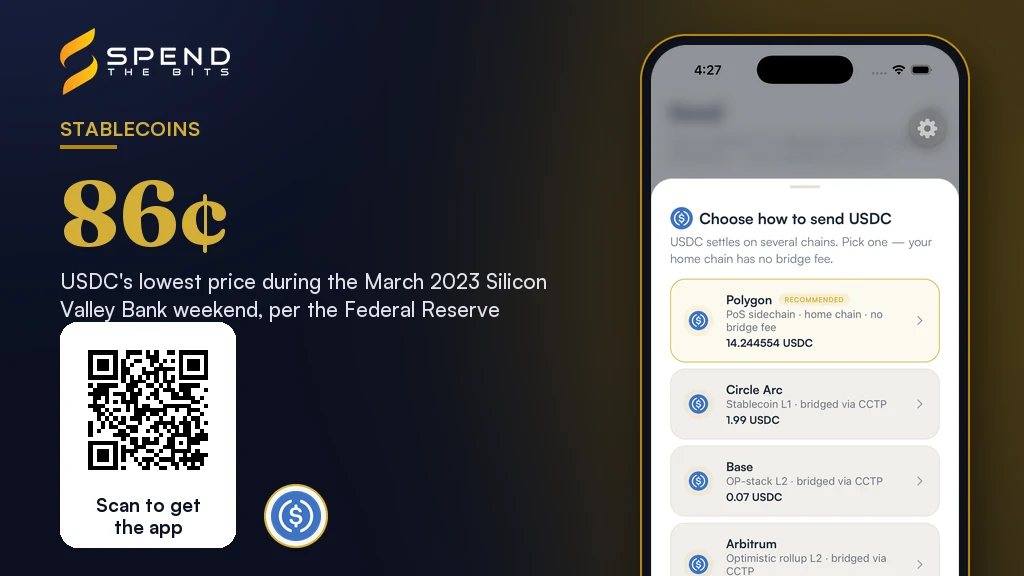
Here is the one time the answer to "is USDC safe" was genuinely in doubt. On Friday 10 March 2023, Silicon Valley Bank failed with $3.3 billion of USDC reserves on deposit, about 8% of the total reserve at the time [2]. Circle said so publicly that night, and within hours USDC was under a dollar. By 2am on Saturday 11 March it had fallen to $0.87 and it stayed below its target all weekend [3]. The Federal Reserve's own review puts the trough at 86 cents [1].
Banks were closed, so Circle could not mint or redeem. That left the open market as the only place to sell, and sellers outnumbered buyers. The remaining reserve was fine: $32.4 billion in Treasury bills and $9.7 billion in cash, $42.1 billion in all [2]. The problem was never that the dollars did not exist. It was that a slice of them was stuck behind a closed bank door for a weekend.
On Sunday 12 March at 6:15pm ET the Treasury, Federal Reserve and FDIC announced that SVB depositors would be made whole [1]. The price recovered sharply on that news and fully once Circle began processing redemptions on Monday 13 March [1]. Circle's Monday statement confirmed the $3.3 billion would be fully available when banks opened [2]. By 15 March Circle had redeemed $3.8 billion of USDC at par [1]. Two days under a dollar, then back. That is the entire depeg record.
The GENIUS Act: reserves are now a matter of law
Until 2025, USDC's reserve rules were Circle's own policy. That changed on 18 July 2025 when the GENIUS Act was signed into law as Public Law 119-27 [6]. It is the first US federal framework for payment stablecoins, and its Section 4 reads like a list of lessons from the SVB weekend [6].
The law requires a permitted issuer to hold reserves "on an at least 1 to 1 basis" [6]. The permitted assets are narrow: US coins and currency, demand deposits at insured banks, Treasury bills with 93 days or less to maturity, overnight repos backed by those bills, and a few similar instruments [6]. Reserves may not be pledged or reused [6]. Issuers must publish the monthly composition of their reserves on their website, have each month-end report examined by a registered public accounting firm, and have the CEO and CFO certify its accuracy, with a criminal penalty for a knowingly false certification [6].
Two more clauses matter to a holder. First, if an issuer fails and the reserves fall short, stablecoin holders get first priority over every other claim on the estate, including administrative expenses [6]. Second, an issuer may not pay holders any interest or yield just for holding the coin [6]. Note the timing: the Act takes effect on the earlier of 18 months after enactment or 120 days after the final regulations are issued [6], so some duties are still being phased in as we write.
Issuer risk and custody risk are two different questions
Everything above is issuer risk: the chance that Circle's reserve is worth less than a dollar per coin, or that you cannot reach it for a while. Is USDC safe from it? Mostly, and it is the same risk whether your USDC sits on a phone, a hardware device or an exchange account.
Custody risk is separate. It is the chance that whoever holds your USDC for you stops giving it back. A platform can freeze withdrawals, get hacked, go bankrupt, or lock your account pending a review. In 2023 the coin came back to a dollar in two days [1]. Customers of the platforms that collapsed in 2022 waited far longer. That record is laid out in what happens to your crypto when an exchange collapses.
A self-custody wallet removes custody risk. Your keys live on your device, so no company stands between you and your coins. It does not touch issuer risk at all. USDC in your own wallet fell to 86 cents in March 2023 exactly like USDC everywhere else [1]. So when someone asks "is USDC safe in a self-custody wallet", the honest answer is: you have removed one of two risks. That is a big deal, but it is not a shield against the other.
Holding USDC so only one risk remains
In SpendTheBits, USDC is held on your own on-device keys across the 13 chains the app supports, and the balances roll up into one number. The company never holds your funds or sees your seed phrase; the security page has the details. Set up the wallet, back up your recovery phrase, and receive USDC to an address you control. Our guide on how to self-custody stablecoins covers the full path.
Two habits close the remaining gaps that are yours to close. First, hold native USDC rather than a wrapped copy. A bridged token adds a bridge's risk on top of Circle's, and we lay out why in native vs bridged USDC. Second, treat anything that arrives unasked with suspicion. Fake "USDC" tokens are common; how to spot a fake token or scam transfer shows what the app flags. Before every send, SpendTheBits screens the recipient address against sanctions and scam lists and blocks flagged ones. None of that changes whether USDC is safe at the issuer. All of it reduces the risks that in practice cost people more.
If you use USDC daily across several chains, the everyday multichain page shows how the pieces fit together.
So, is USDC safe? An honest verdict
Is USDC safe from the issuer failing? Very likely, and more so than before. The reserve is Treasuries and cash, it is checked monthly by a Big Four firm, and federal law now fixes what counts as a reserve and puts holders first in line if something goes wrong [5][6]. The one depeg was caused by a bank, not by Circle's assets, and it lasted two days [1]. Is USDC safe from a platform freezing it? Only if no platform holds it. That part is your choice, and it is the part a self-custody wallet solves.
We hold USDC because its reserve and its law are the best in the category. We hold it in our own wallet because no reserve helps you when the withdrawal button is greyed out. Do the same and the question "is USDC safe" shrinks to the smaller of the two risks, with public monthly evidence of how small it is.
In the app · 4 steps
Check your own USDC exposure in SpendTheBits
The issuer question is Circle's. The chain question and the custody question are yours, and the app answers both.
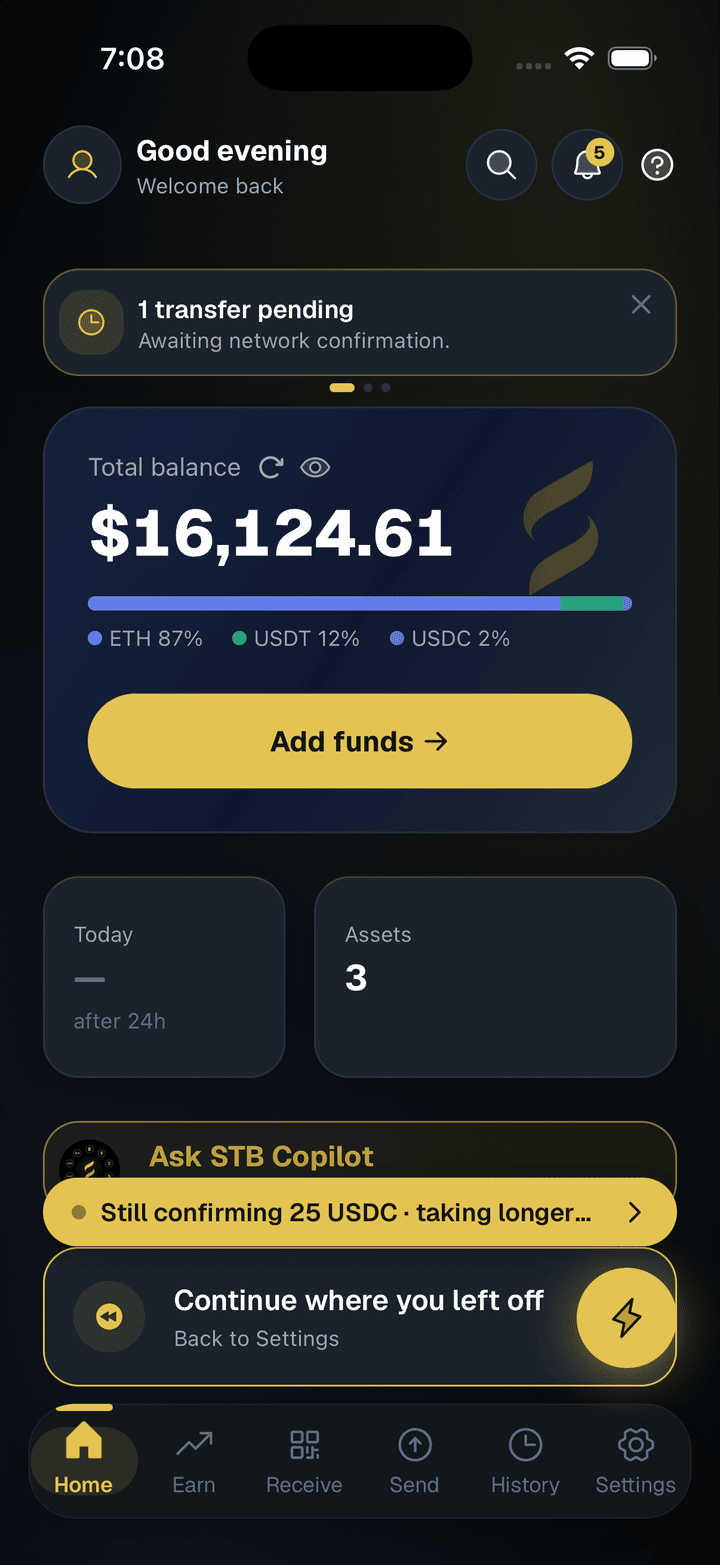
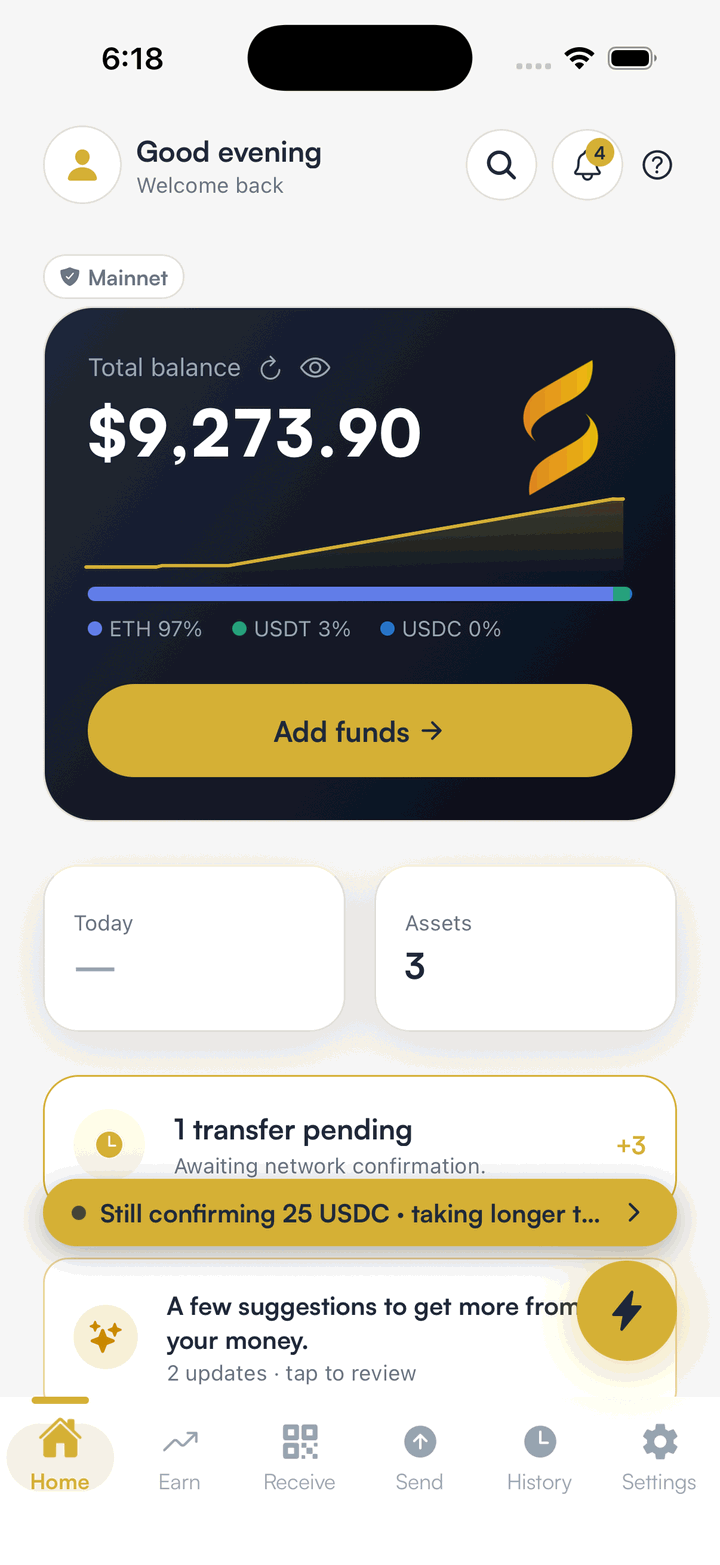
See how much of your balance is stablecoins
Home splits your total by asset, so your USDC share is one glance away.
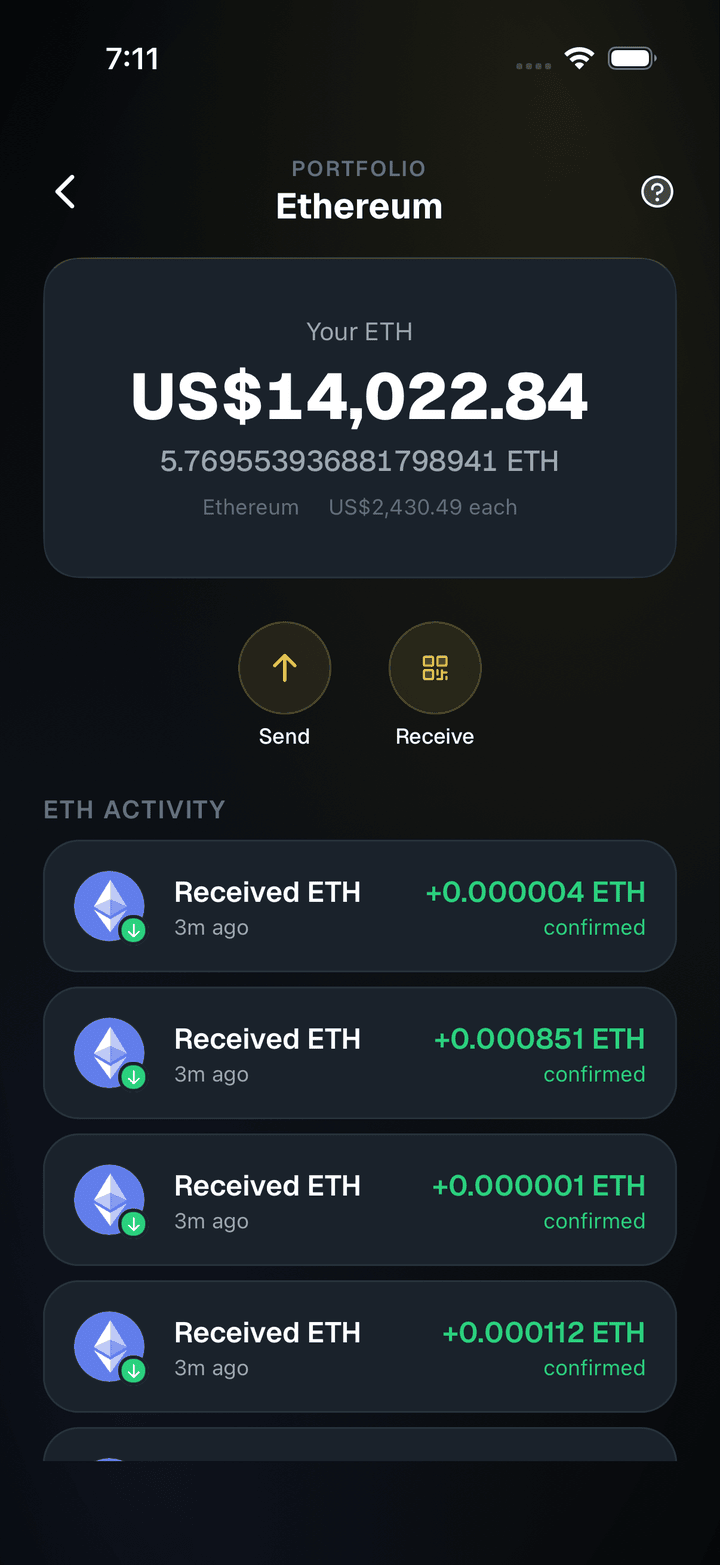
Open an asset to see where it sits
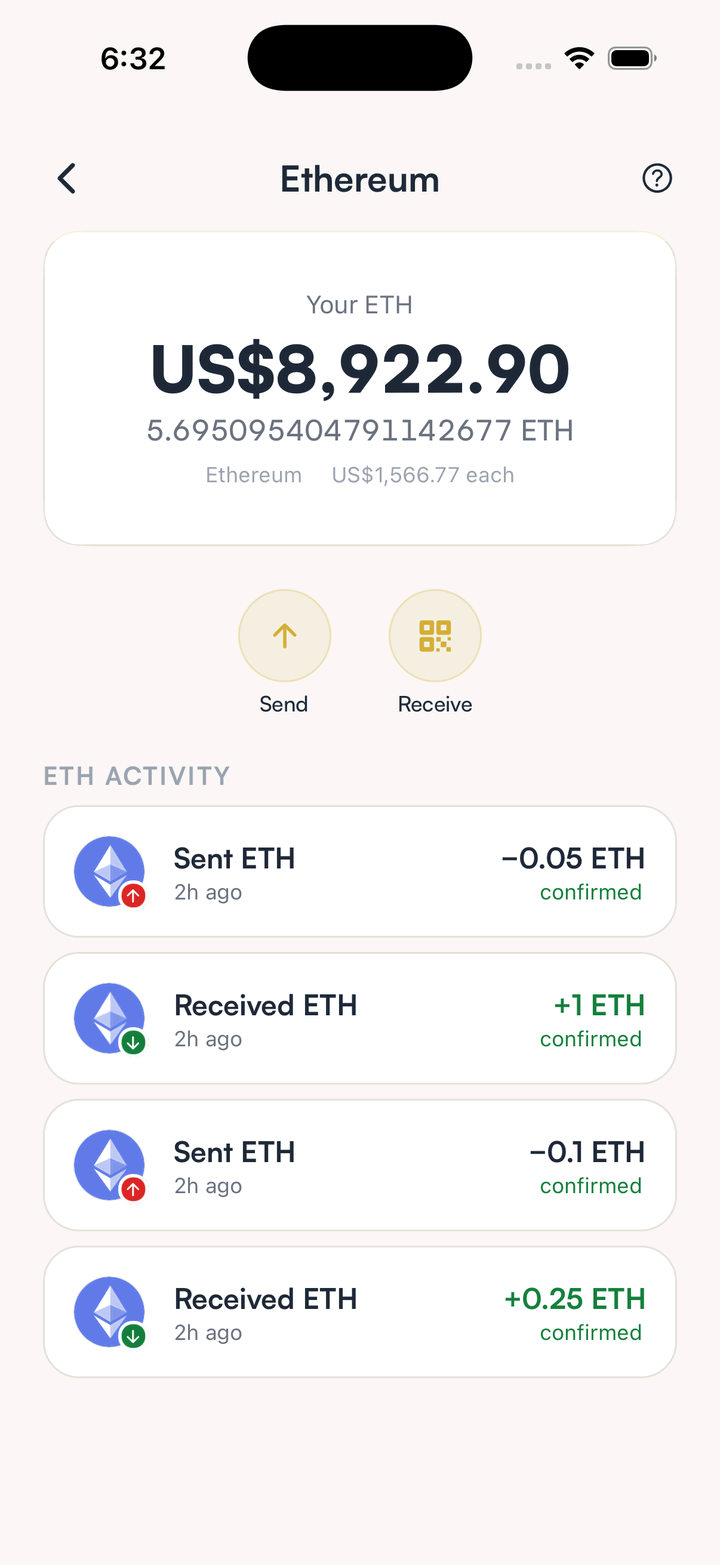
Tap any asset for its balance, value and activity. For USDC, check which chain each balance is on, because the same token on two networks is two separate balances.
Consolidate on native USDC
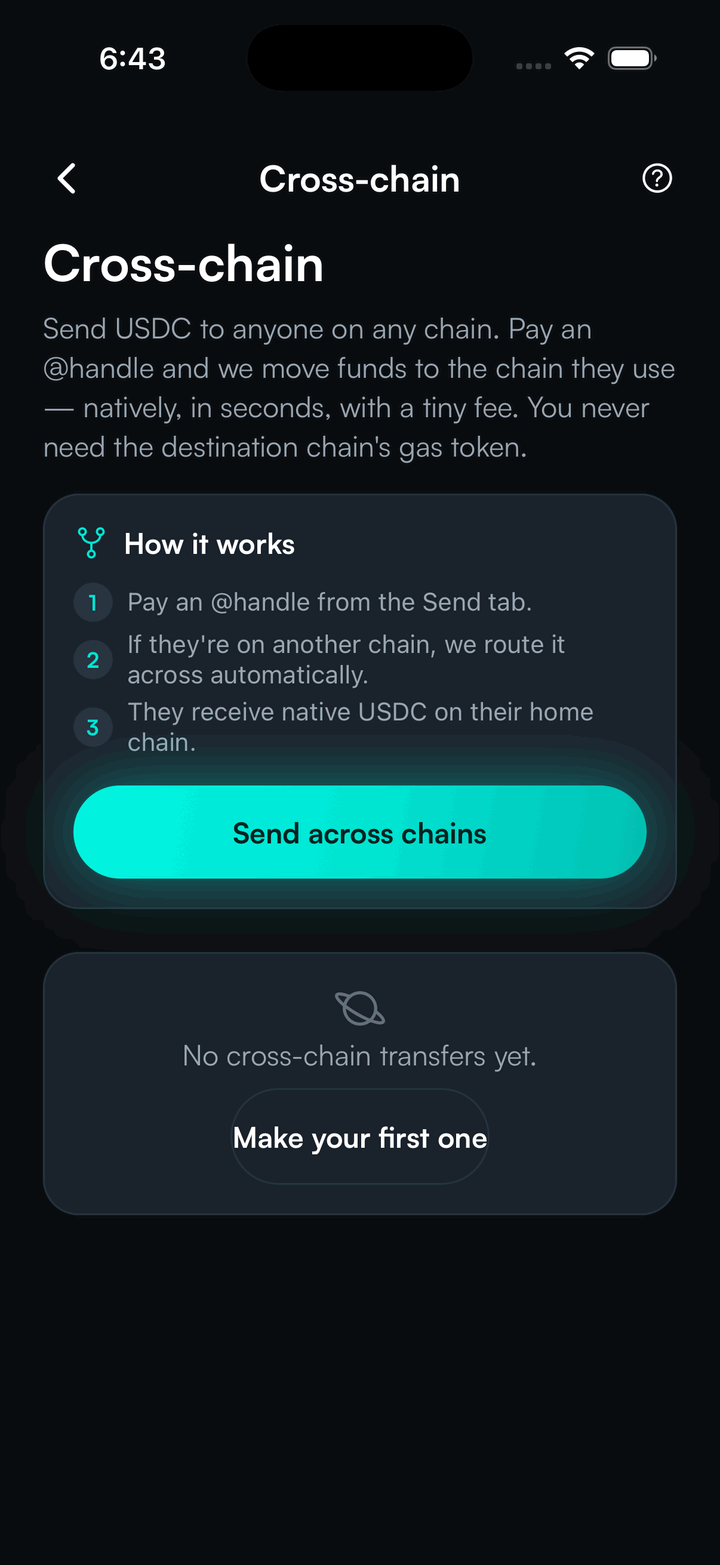
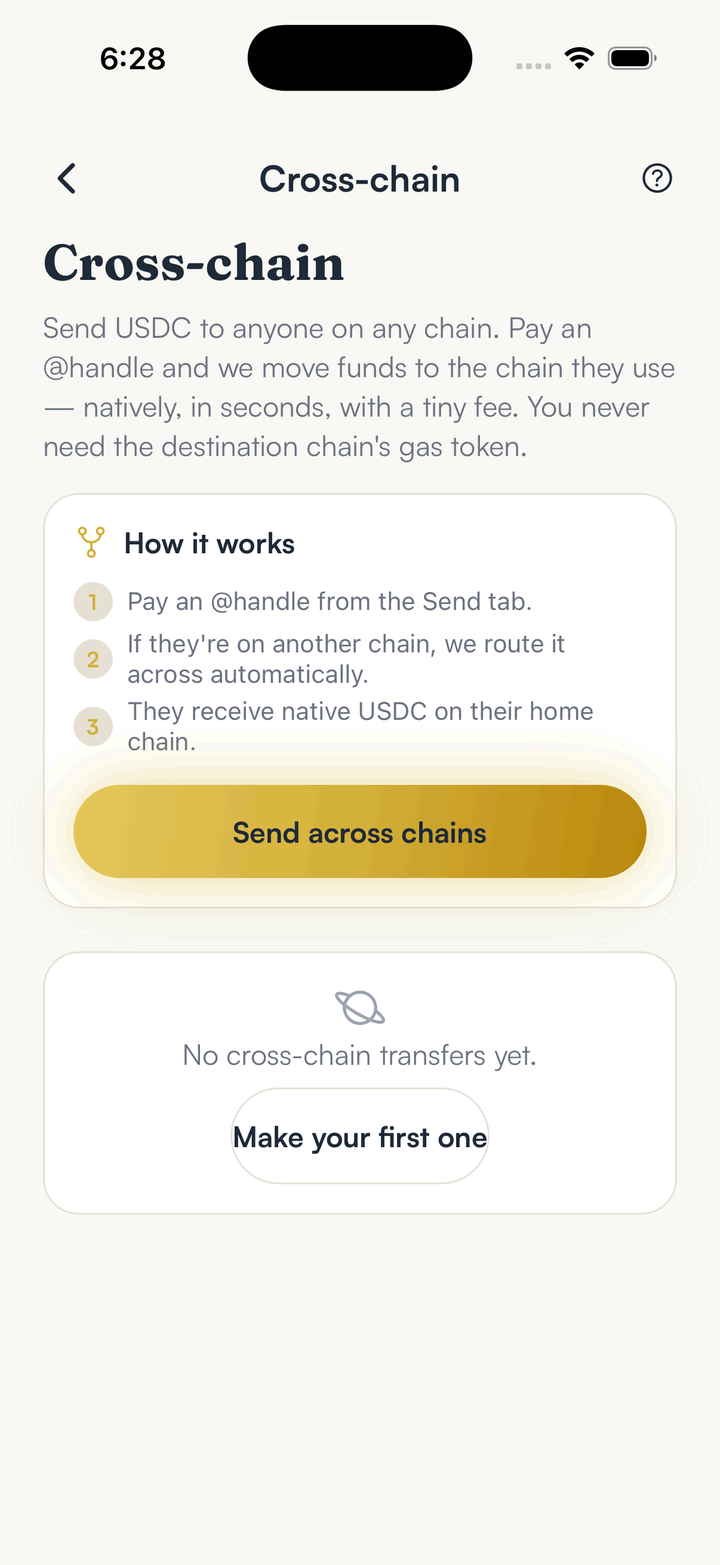
Cross-chain moves USDC between networks through Circle's burn-and-mint rail, so what arrives is native USDC, not a wrapped copy.
Keep the keys yourself
Whatever you decide about USDC, it sits under keys only your phone holds. Back up the recovery phrase before you hold a meaningful balance.
Hold your own keys, keep the yield, skip the middleman.
SpendTheBits is a fully non-custodial wallet for 13 chains, free on iOS and Android.