
The Friction of Legacy Payday Systems
The classic two-week pay cycle is a relic of old paper books and slow bank setups. Old bank networks take days to clear global wires, which makes life hard for remote teams. Choosing stablecoin payroll cuts out these middle players entirely. It builds a direct path from firms to staff. By using self-custody tools, firms can pay staff directly on the chain. This setup gives remote workers quick access to their cash. They do not have to wait for bank hours.
When firms use old wire services, they face high fees and slow times. A single transfer across borders can take three to five days to clear. This lag hurts remote workers who need their pay fast. Also, corporate teams must keep large cash piles idle just to fund these big batch runs. This practice locks up valuable funds that could help the firm grow. It hurts work speed and limits how firms use their cash.
Digital currencies like USDC inherit the speed, efficiency, and security of public blockchain networks [4]. To keep things stable, Circle backs this digital dollar with safe cash assets [4]. These assets sit in secure funds so they are always ready to redeem one-to-one for paper cash [4]. The issuer shares monthly proof reports to keep things open and clear [4]. This open setup gives firms the trust they need to hold digital cash as a solid option.
Streamlining Approvals via ERC-2612 Permits
On typical chains, paying staff with a smart contract is a two-step chore. First, the user must approve the contract to spend their tokens [1]. Second, the user must send a transaction to execute the real transfer [1]. This design creates a poor user flow because it needs two separate on-chain steps [1]. It forces the user to sign two times. It also makes them pay gas fees for both steps, which makes simple tasks hard [1].
The ERC-2612 standard fixes this block by using signed messages [1]. This tool lets users change spend limits with an offline signature [1]. They do not need an on-chain step [1]. A helper can then submit this signed paper to the chain [1]. The helper pays the gas fee for the user [1]. This means the firm does not need to send two steps or hold gas coins to approve the contract [1].
This standard has a nonce check to stop replay risks [1]. Firms can also set a clear deadline to limit how long a signature is good for [1]. Since these signs are secure, any helper can send them to the chain [1]. This setup means key accounts do not need to hold native gas coins [1]. It simplifies stablecoin payroll setups. It ensures that admin tasks stay secure and simple for firms who want to pay global teams.
Predictable Gas and Bounded Fees on Arc
High and jumpy fees have kept micro-payments from working on public chains. On standard networks, gas spikes make small transfers cost too much. Arc fixes this issue by smoothing its base fee [2]. It does not change fees block by block [2]. Instead, it uses a moving average of block use to keep fees steady [2]. This math stops sudden demand spikes from raising fees in an instant [2]. It keeps costs stable and very easy to forecast [2].
Under normal load, the floor fee targets about 0.001 USDC per transfer [2]. This low cost makes micro-payments work well for streaming pay. Since Arc uses USDC as its gas token, firms do not need a second coin to pay fees [2]. All network costs are paid in digital dollars [2]. This simple design makes tax work and budgets easy to track. Every network cost maps directly to a known dollar amount [2].
In our production test on 18 September 2026, we measured that a USDC send on Arc cost about 0.001 USDC. We also measured that the relayer's mint on Arc cost about 0.004 USDC. To compare these steady fees, read our breakdown of different blockchain wallets. Unlike other networks, Arc does not burn its base fees [2]. Both base and tip fees go to the block block-producer [2].
Sub-Second Finality and Real-Time Settlement
Many chains use slow, unsure consensus. This forces users to wait for many blocks to be safe. This delay forces apps to check the chain many times before acting. Arc ends this wait by using BFT consensus [3]. This setup gives sure finality in under one second, settling deals for good [3]. It removes the wait times that slow down corporate cash moves.
This fast settlement changes how finance apps track money. Instead of watching a long wait window, apps only track two states: unconfirmed and final [3]. This removes chain split risks [3]. It lets systems trigger quick off-chain steps like webhooks right away [3]. This matches the strict needs of regulated firms [3]. It lets corporate teams verify transfers in an instant and move on with their daily work.
For remote staff, fast finality means streamed cash is ready to use or bridge right away. They do not have to wait for block checks to spend their pay. To learn how to make the most of these funds, read our guide to earning yield on USDC. In contrast, Arc settles blocks on commit, cutting out settlement lag [3]. Once two-thirds of validators sign, a block is final [3].
Accounting, Controls, and the CFO Books Integration
Moving to constant pay streams brings unique book and tax tasks for finance teams. A firm using stablecoin payroll can create thousands of micro-transactions. Tracking these lines by hand would quickly overwhelm any finance team. It would also make tax prep very hard. Founders need strong tools to read this ledger data. They need to export clean files straight to their books. They need a system built for high transaction counts.
SpendTheBits solves this with built-in support for CFO Books. This tool turns complex chain history into clean cost-basis lots. It uses FIFO or HIFO accounting paths. Firms can view real and paper gains or losses on their main screen. The tool exports journal files right to QuickBooks or Xero. This bridges the gap between public chains and legacy accounting books. It automates tasks that used to take days of manual work.
To understand these tax paths, read our guide on FIFO vs HIFO crypto taxes. Having clean, auditable logs keeps your firm safe with tax offices. It cuts down on the need for costly external help. It also stops manual data entry mistakes. This integration lets finance teams focus on growth instead of tracking single transfers. It brings clear data for audits.
Implementing Continuous Streams and Wallet Limits
To keep company funds safe, you need strong guardrails to stop theft. SpendTheBits is a self-custody wallet. This means private keys are made and kept only on your own device. The app never sees your seed phrase and cannot freeze or reverse your transactions. To protect your assets, you can set up spending limits. For more, read our step-by-step guide to self-custody wallets. This ensures you keep full control of your cash.
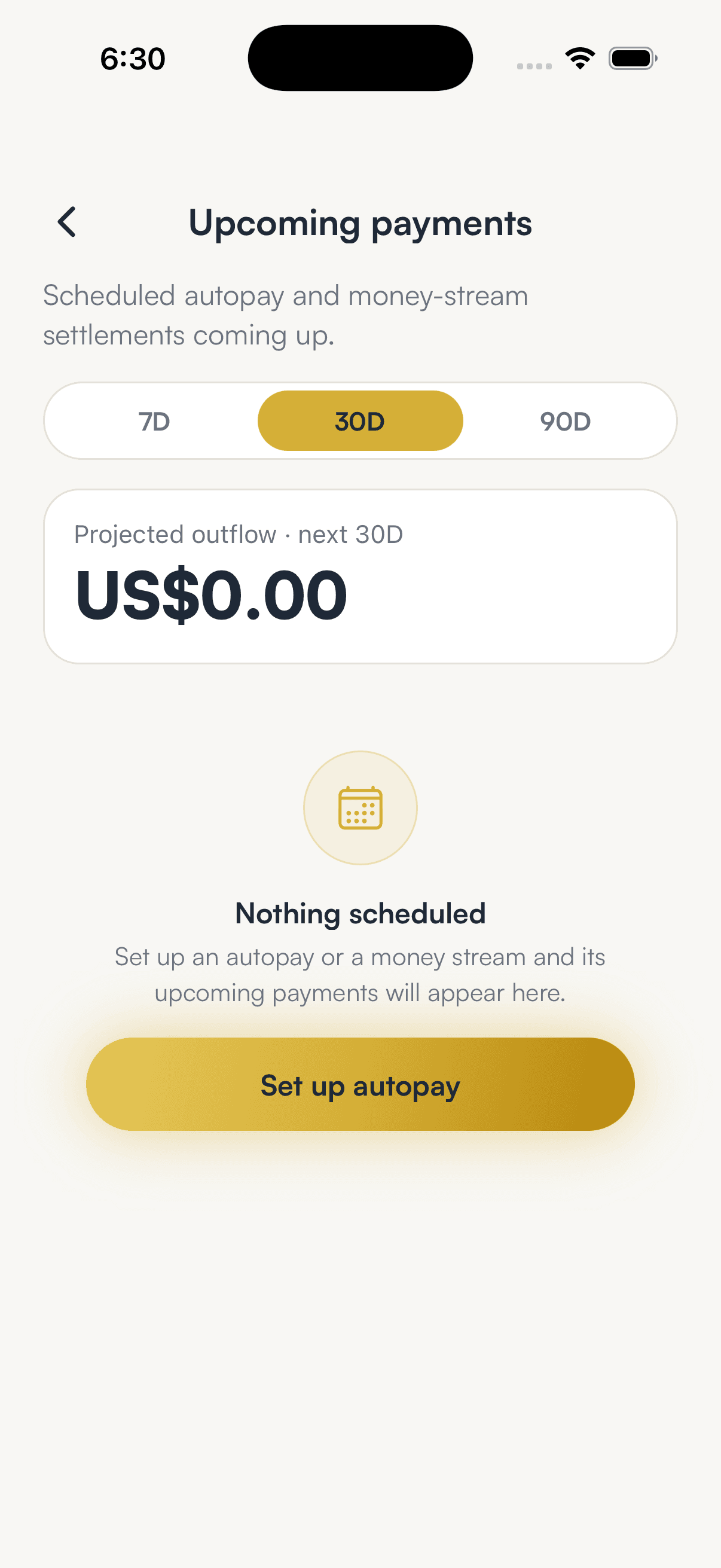
The SpendTheBits screen lets you plan, make, and review money streams. But please note that money streams and autopay are not live for real settlement on the mainnet today. No automated payment goes out on its own today. This design lets teams test setups and draft stablecoin payroll structures safely. While waiting for live streams, firms can send USDC on Arc by hand with ease.
To keep your assets safe, loosening any guardrail triggers a forty-eight hour delay. This delay blocks quick changes if a phone is lost or stolen. The app also has a one-tap freeze switch to halt all outgoing sends at once. If you see bad activity, this tool blocks pending moves before they reach the chain. These secure tools give teams peace of mind while they set up new pay plans. They offer safety with no custody risk.
In the app · 4 steps
Pay a remote team in USDC on Arc today
Automated streams do not settle on mainnet yet, and the app says so. What works today is a send on Arc: final in under a second, with a fee of about a tenth of a cent.
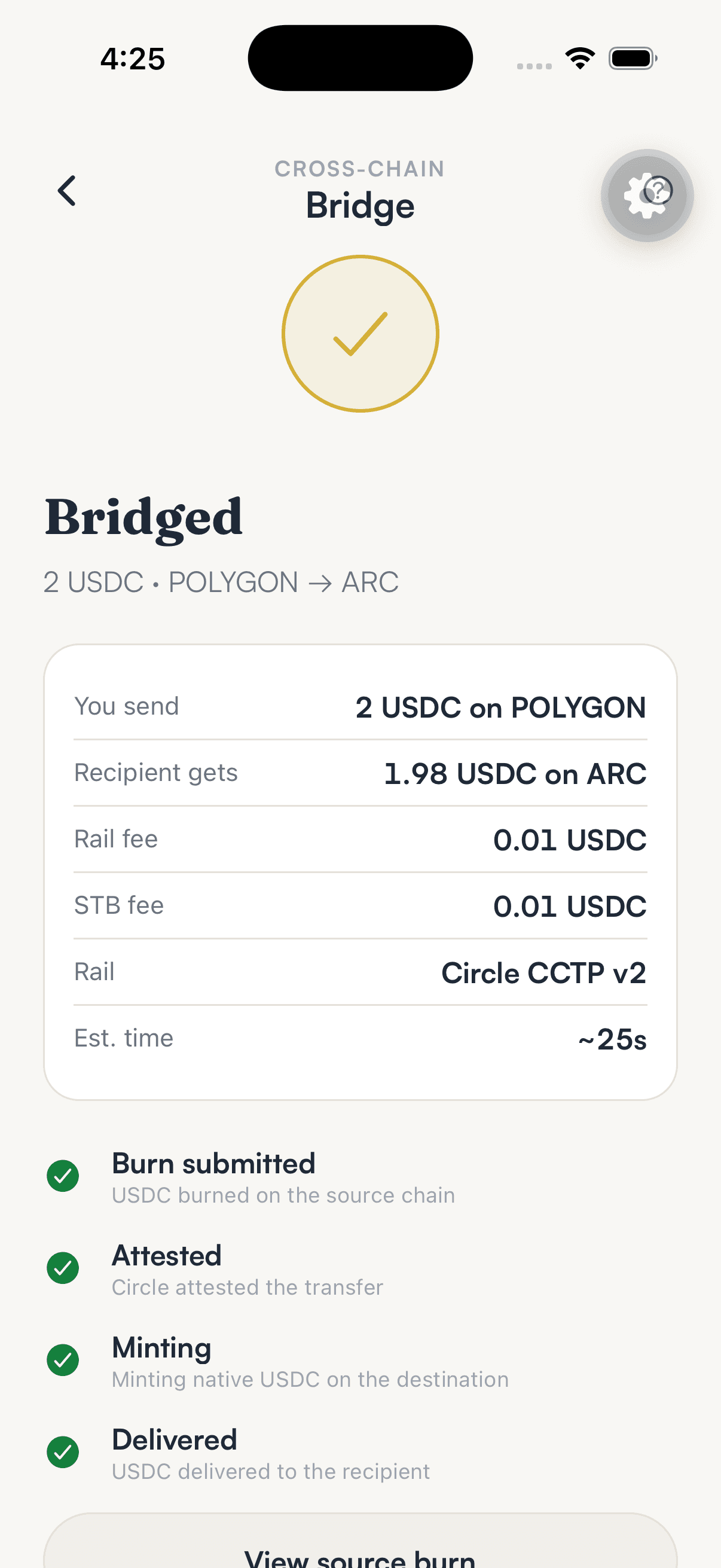
Get USDC onto Arc
Bridge from Polygon or another chain with Circle's CCTP. In our test it took about a minute.
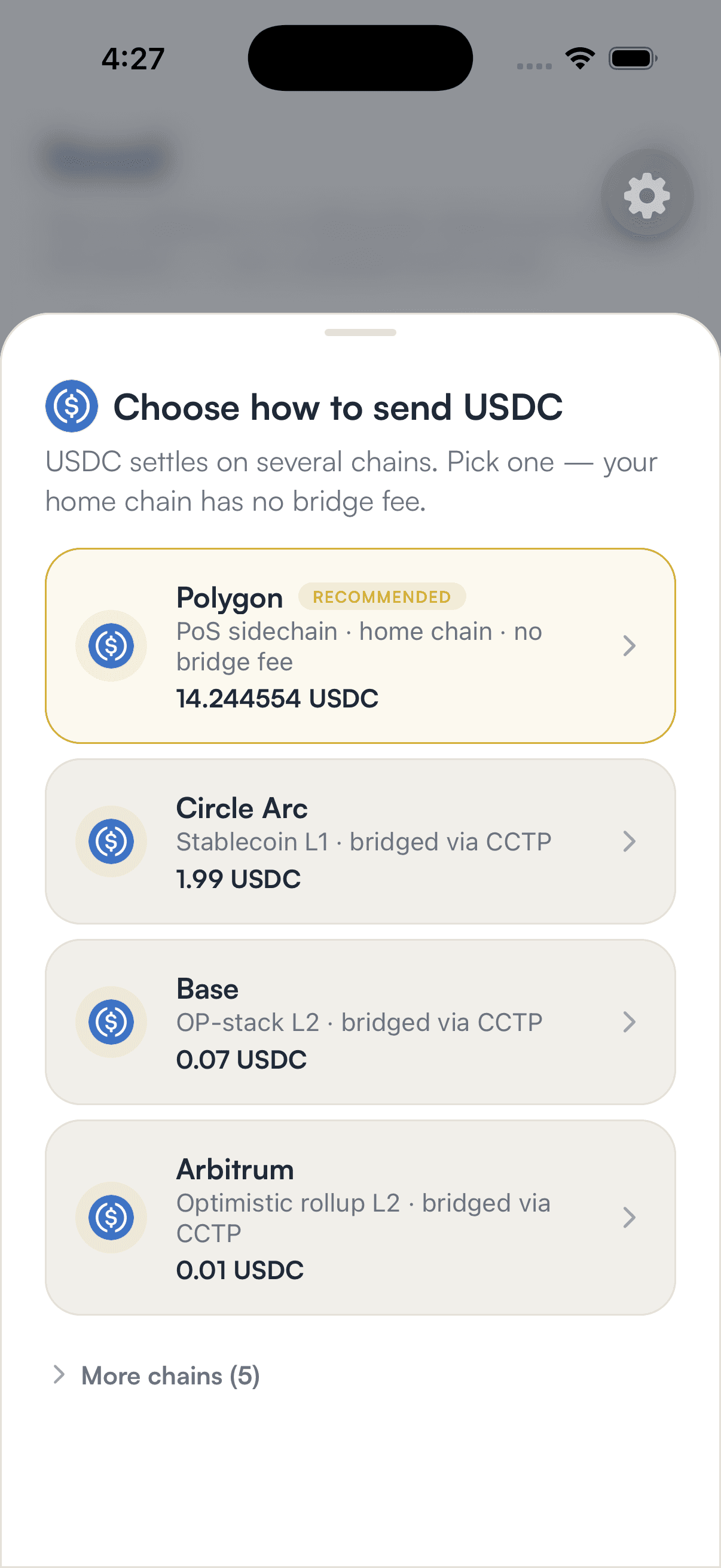
Choose Arc as the chain to pay from
When you send USDC, pick Circle Arc so the fee is paid in USDC.
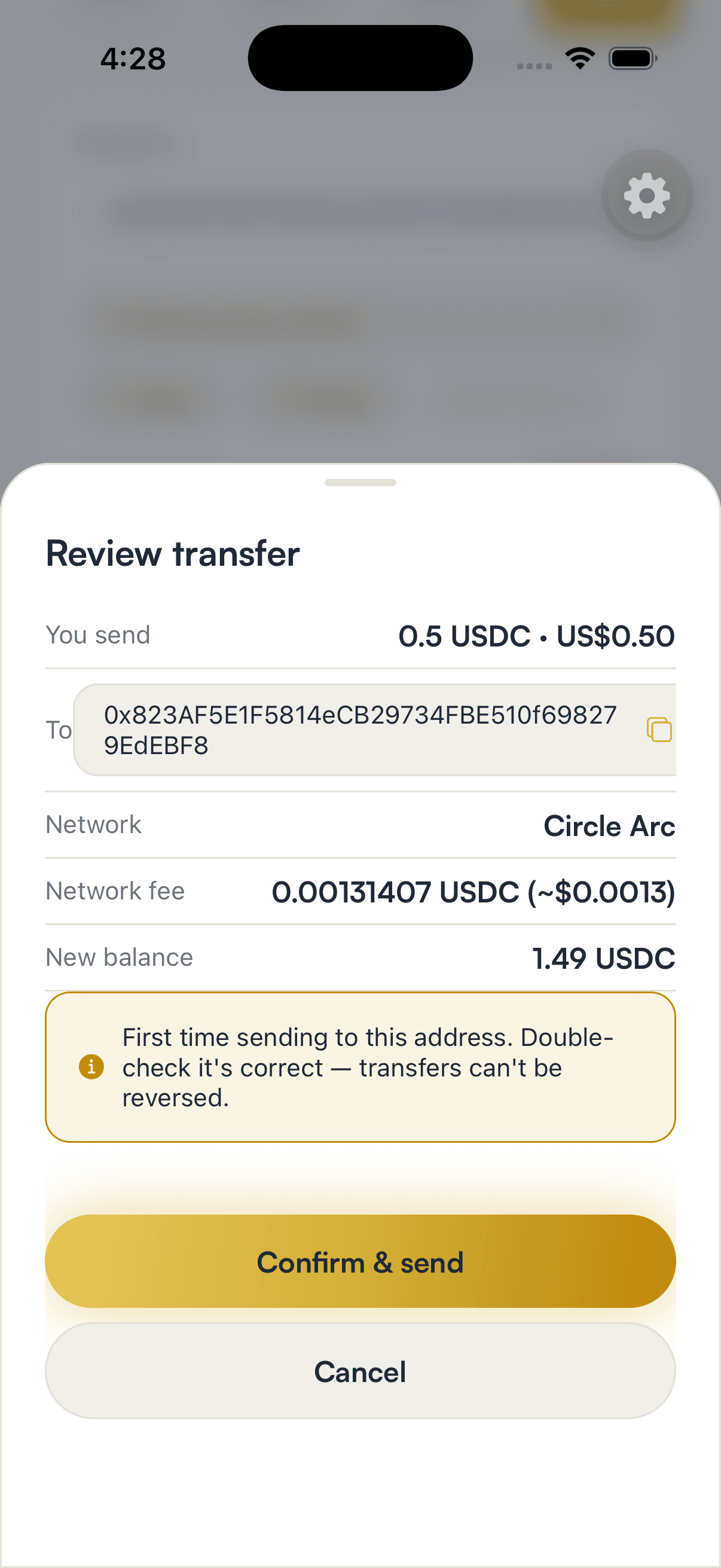
Review and sign each payment
The review shows the amount, the recipient and a network fee of about 0.001 USDC. Face ID signs it on your phone.
Plan the schedule without surprises
Money streams can be planned and reviewed in the app, but no payment goes out on its own today. Until settlement is live, run payroll as reviewed sends.
Hold your own keys, keep the yield, skip the middleman.
SpendTheBits is a fully non-custodial wallet for 13 chains, free on iOS and Android.