
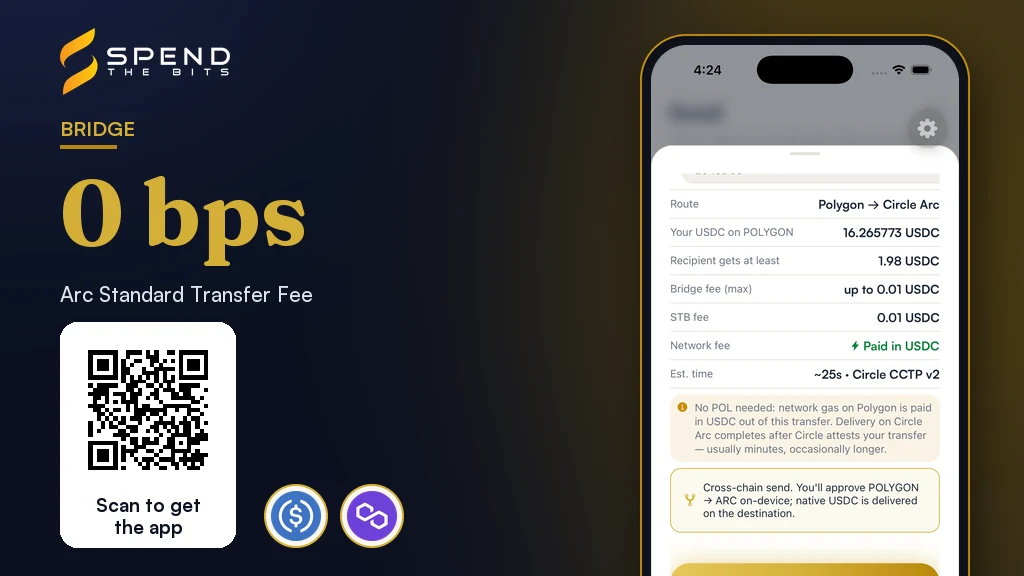
The Burn and Mint Mechanism Explained
Old bridges lock your funds in a smart contract on one side. This method is risky because hackers target those big pools. CCTP natively transfers USDC across blockchains using burn-and-mint, and extends to EURC and registered third-party assets through CCTP for non-USDC, all without traditional bridge liquidity pools [1]. Instead, the utility natively transfers stablecoins across networks using a burn and mint method [1]. Cross-Chain Transfer Protocol natively transfers USDC across blockchains using a burn-and-mint mechanism [1]. This action removes those specific tokens from circulation. It ensures that no duplicate tokens exist across networks during the transfer.
For non-USDC assets, CCTP uses its shared Iris infrastructure to provide attestation support [1]. Once the burn is verified, the system generates a cryptographic proof. This ensures that your transaction is valid and fully authorized.
Finally, this proof goes to the destination chain. This ensures you get real tokens on the new chain. For more on this, view our guide on native versus bridged stablecoins. It explains why native tokens are much safer than wrapped ones. When you use native tokens, you avoid the wrapper smart contract risks entirely. Your assets remain secure and fully functional on the destination network.
Choosing Between Standard and Fast Transfers
When you prepare to bridge USDC to Arc, you must decide between speed and cost [1]. CCTP is available on multiple blockchains where stablecoins are natively issued [4]. The protocol supports both standard and fast options depending on your needs.
If you use a standard transfer from Ethereum, it takes fifteen to nineteen minutes [1]. If you are in a rush, you can choose a fast transfer instead [1]. A fast transfer uses Circle's fast transfer allowance to bypass long finality waits [3]. This option lets you move your assets in seconds instead of minutes.
Fast transfers are designed for speed but incur a small protocol fee [3]. The fee rate depends on which chain you start from [3]. You can choose the mode that fits your schedule and budget. Standard transfers are widely supported on many networks [4]. If you choose a fast transfer, you can pay your costs upfront on supported source blockchains [4]. Paying upfront ensures the receiver gets the full transfer amount [3].
Paying your protocol fees upfront is highly beneficial when you want the recipient to get the exact amount sent [3]. The source chain must support upfront fees to pay for these services before the transfer starts [4]. When you use this option, the system calculates the fee before the burn happens [3]. If you decide not to pay upfront, the fee is simply deducted during the minting process on the destination chain [3]. Choosing the right fee payment method allows you to manage your transaction costs cleanly and efficiently.
Understanding Circle Protocol Fees
Circle charges a fee only on fast transfers [3]. The protocol fee varies by route [3]. The fee is deducted from the transferred amount when USDC is minted on the destination blockchain [3]. The fee rate typically ranges from zero to thirteen basis points [3]. This cost is always under one percent.
The protocol usually takes this fee from your tokens when they mint on the destination chain [3]. But you can also pay it upfront [3]. This is possible if the source chain supports upfront fees [3][4]. Paying upfront means the receiver gets the exact amount you sent [3]. You should check if your source chain supports this option [4].
If you write code, you must specify a maxFee parameter [3]. If the actual fee exceeds your specified maxFee, the transaction will revert on the source blockchain, and no USDC will be burned [3]. Do not hardcode these rates because they can change at any time [3]. To avoid issues, retrieve the current fee before initiating a transfer [3]. Then add a small buffer before you start [3].
What Influences Your Transfer Speed
You can configure CCTP speeds by choosing between Fast Transfer for speed or Standard Transfer for cost efficiency [1]. This process can take fifteen to nineteen minutes on networks like Ethereum [1]. Different source blockchains have different finality times, which directly impacts standard speed.
Fast transfer speed depends heavily on Circle's allowance pool. Fast Transfer enables USDC transfers at faster-than-finality speeds by leveraging Circle’s Fast Transfer allowance [3]. If this allowance is low, the transfer may revert to standard speed [3]. Large applications must monitor this pool to keep users informed. This monitoring helps avoid unexpected delays during high-volume periods.
Network congestion on either the source or destination chain can also cause delays. If Arc is down, routing uses the other chains instead. This keeps your funds safe. It lets you send your tokens using other paths without waiting for a fix. Your assets already on the destination chain stay secure and can move again later.
Fast transfers are not available on every blockchain because some networks already have very short attestation times [4]. On networks where the standard attestation is already rapid, the fast option is not necessary [4]. Understanding these network-specific differences helps you choose the right source chain for your assets.
Direct Mint vs Forwarding Service
Under the standard model, the user's own device signs the burn on the source blockchain. This is called the direct mint path.
With SpendTheBits on Arc, gas is paid directly in USDC so you do not need to hold a second coin.
SpendTheBits makes holding and bridging USDC to Arc straightforward for users. We pay the gas for you. The device signs the burn and SpendTheBits' relayer pays the gas for the mint on Arc. This means you do not have to hold any gas tokens to bridge your funds. You get a seamless experience without dealing with technical steps. Read our guide to bridging stablecoins to learn how to move your funds.
To find out the current Fast Transfer fee for your route, you can query the GET /v2/burn/USDC/fees endpoint [3]. Because CCTP fees can change at any time, you should always retrieve the current fee before starting a transfer [3].
Bridging in Practice with SpendTheBits
Keeping your money safe is our top goal. The seed phrase and private keys are generated and stored only on the user's device. Every transaction is signed locally before it goes out. Our system prepares unsigned transaction context and relays device-signed transactions, which means it never sees a seed or private key. Read our guide to self-custody to learn how we protect your keys.
In our production test on 18 September 2026, a Polygon to Arc bridge completed in about one minute, a USDC send on Arc cost about 0.001 USDC in network fee, and the relayer's mint on Arc cost about 0.004 USDC in gas. We charge a small fee, under 1% when using our bridging service. This simple pricing means no surprises when you move your money. You always know what you will pay before you sign. It makes planning your transfers very easy.
Arc is a great network because Arc uses USDC as the native gas token [5]. This means you do not need a second coin to pay for transactions. Any USDC you hold can pay for your network gas. This makes the user experience much cleaner. Check out our piece on USDC gas on Arc. It is a big step for stablecoins. You can manage your balances easily because your stablecoin holdings aggregate across different networks into a single number.
In the app · 4 steps
Bridge USDC to Arc in SpendTheBits
The bridge is a normal send that the device signs. Here is the path from picking a chain to seeing it arrive.
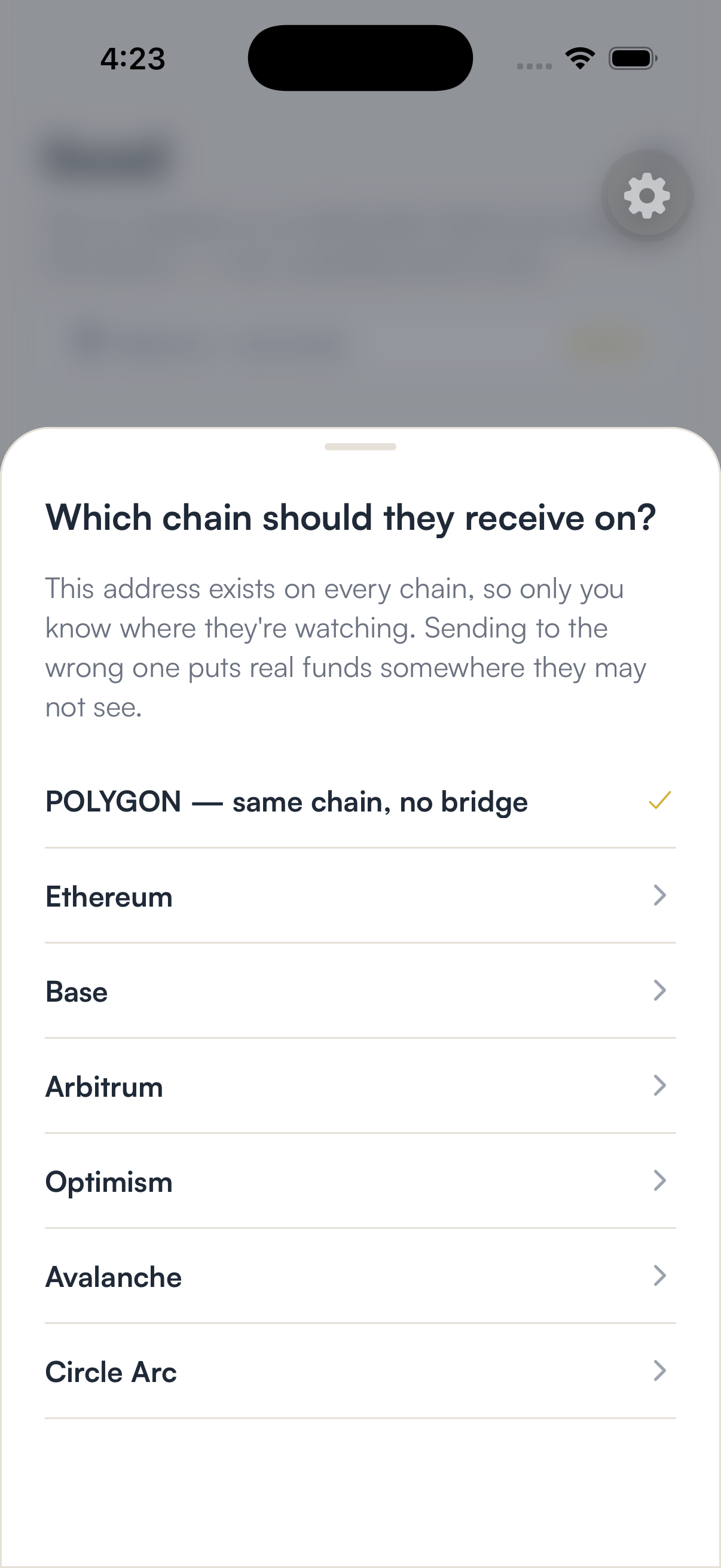
Choose where the USDC should land
Pick the receiving chain first. The app only offers routes it can price and track.
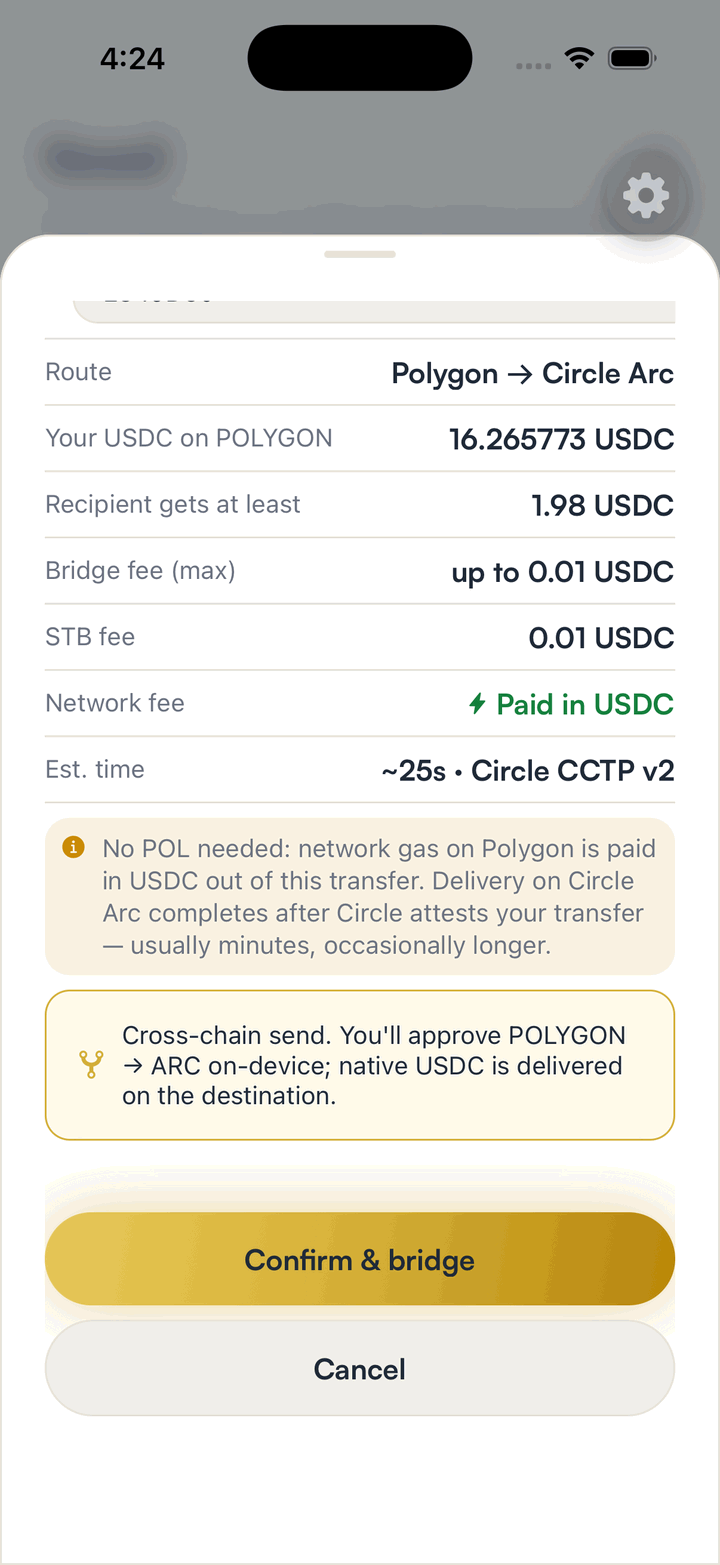
Review the route before you sign
The review shows the source, the destination and the fee in USDC. You sign on the device.
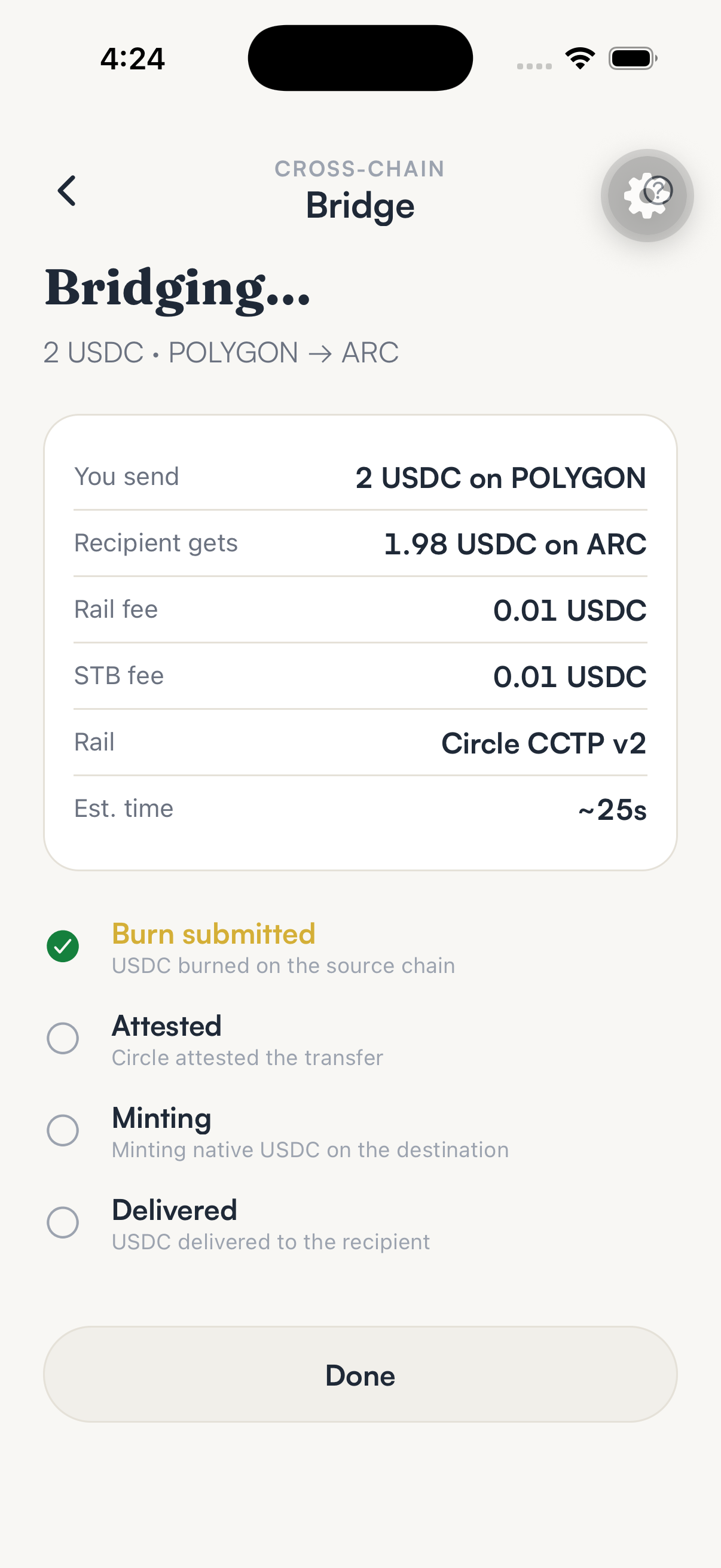
Watch it move
The transfer shows each stage until the USDC is minted on the destination chain.
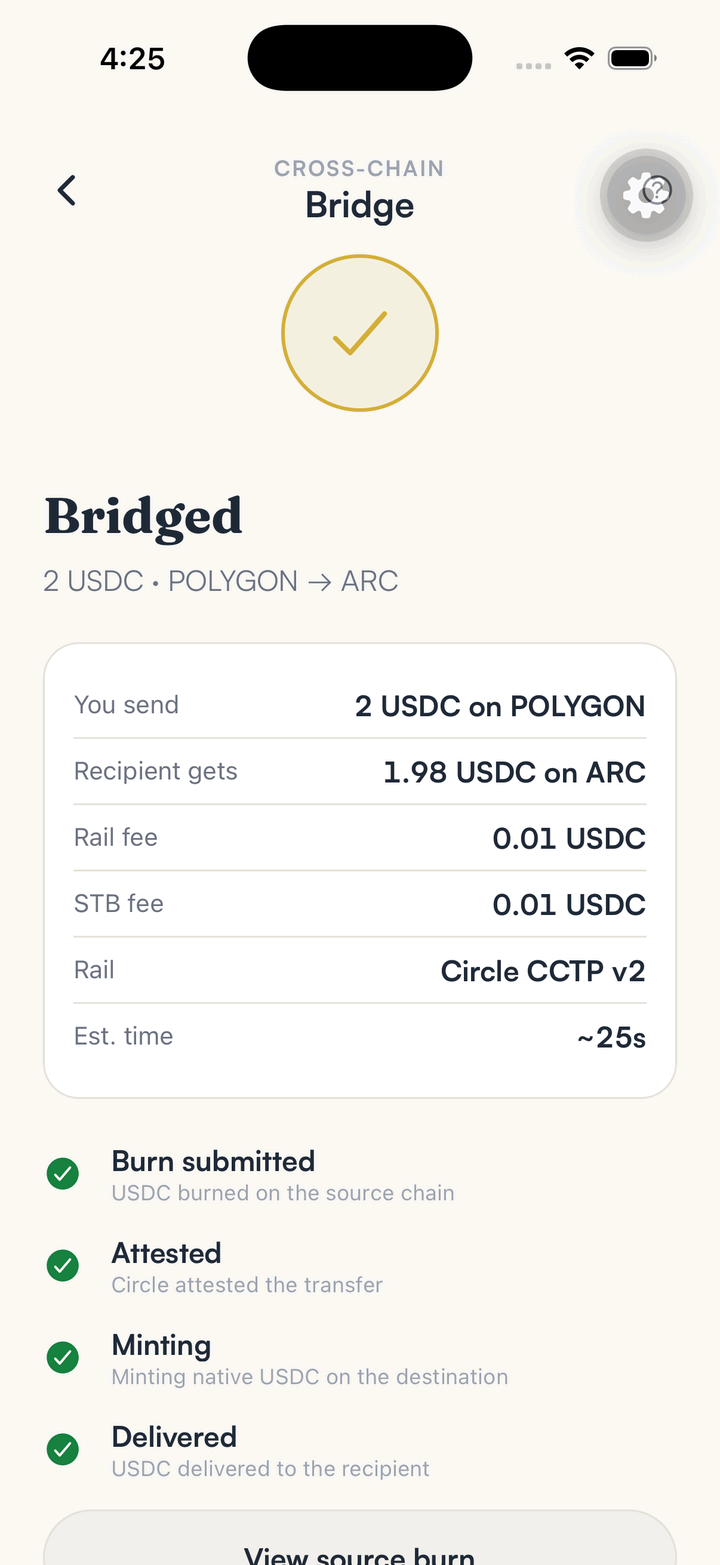
Confirm it arrived
The arrival screen shows the amount that landed and where to find it.
Hold your own keys, keep the yield, skip the middleman.
SpendTheBits is a fully non-custodial wallet for 13 chains, free on iOS and Android.