
Why a bank transfer abroad takes so long
A payment between two countries rarely goes straight from sender to receiver. The Financial Stability Board has tracked the decline in these correspondent banking links since 2015 and ran an action plan to assess and address it [1]. When fewer banks hold such links, fewer routes exist, and the ones left can be slower and pricier.
The CPMI points to payment systems that run on different hours, with fast payment systems usually open around the clock while large-value settlement systems keep tighter schedules [2]. If one system is shut while another is open, money waits. Nothing is broken. The clocks simply do not line up.
Messages are a second problem. The G20 roadmap flagged that payment message standards and formats vary a lot across countries, networks and systems, and that this fragmentation adds friction [2]. Banks must translate and check data at every hop. A small mismatch can stop a payment until someone fixes it by hand. For the person waiting on rent money, that means days of silence with no clear reason.
What the G20 roadmap set out to fix
In 2020 the G20 asked the FSB and the Bank for International Settlements to draft a plan. It was built around 19 building blocks covering the frictions behind high costs, low speed, limited access and thin transparency [1]. The aim was not to replace banks but to make the system around them work better. The G20 also backed quantitative targets, 11 in all, across wholesale payments, retail payments and remittances [1].
By 2023 the plan was trimmed to 15 priority actions grouped under three themes: linking payment systems and widening access, aligning rules and supervision, and fixing data exchange and message standards [2]. The shift was from study to doing. The FSB says the target date for the goals is 2027 [1]. The CPMI reports that most of the 15 actions are now done or close to it [2].
This is slow, careful public work, and it matters. Faster payment systems linked across borders can make a real difference for the corridors they serve [2]. But linking national systems takes years of talks, law changes and testing. For a freelancer paid this month, those reforms are not yet the daily experience. That gap is the opening that private tools, including stablecoins, try to fill, and it shapes how far they can reasonably go.
Three of the roadmap's themes tie directly to what a worker feels. Payment system interoperability and extension covers operating hours, access policies and links between systems [2]. Direct access is often hard for foreign or non-bank payment service providers, because of legal limits as well as operational or business choices by the payment system [2]. The CPMI says wider access, done safely, can bring more competition, better innovation and greater inclusion [2]. In plain terms, more kinds of provider could plug into the pipes, and that usually pushes prices and waiting times down.
What sending money abroad costs a worker
The World Bank runs a project that tracks the price of sending small sums between countries, usually by migrant workers. Its Remittance Prices Worldwide database covers 367 country corridors, drawn from 48 sending countries and 105 receiving countries [3]. That is a lot of routes, and the prices differ a great deal from one to another. The cost depends on who you use as much as where you send.
In other words, part of the cost is not technical at all. It is a habit built on poor information, and it favours whoever you happen to know.
For a remote worker, the hidden pieces add up in three places: what the sending bank takes, what an intermediary takes, and the exchange rate you are given versus the real one. You rarely see all three before you commit. If you want to understand your own exposure, our page for freelancers and remote workers explains how people in your position often get paid and what to check first.
The World Bank notes that its price data covers money sent by migrant workers, whose aggregate cash flows and number of participants are enormous [3]. That scale is why small gaps in price matter so much. A few points on each transfer, repeated by millions of people every month, adds up to a large sum leaving the pockets of workers and families. The World Bank also supports payment reforms in over 120 countries, including fast payment systems that make funds available around the clock [3]. Better local rails help the receiving end as well as the sending end.
What a stablecoin transfer actually changes
Circle, its issuer, says it is redeemable 1:1 for US dollars and backed by cash and cash-equivalent assets, with monthly attestations by a Big Four firm [5]. Circle also says it settles around the clock, every day of the year [5].
The route is also shorter. A transfer goes from your wallet to the payer's wallet, with no correspondent banks in the middle and no message translation between networks. Settlement can take seconds. In our production test on 18 September 2026, a Polygon to Arc bridge of USDC completed in about one minute, and a USDC send on Arc cost about 0.001 USDC in network fee.
USDC is natively issued on 38 blockchain networks [5], so you may need to move it from one to another. Circle's CCTP supports native USDC transfers across a long list of chains [4]. SpendTheBits uses CCTP for its bridge, with a small bridge fee, under 1%, shown before you confirm. If you want the full picture of that step, see our bridge guide, and for why native matters, read our note on native versus bridged USDC.
What stablecoins do not fix: the last mile
Here is the honest limit. A stablecoin makes the middle of the journey faster, but you still live in a local currency. Circle itself notes that exchanging USDC back to dollars through Circle Mint is open to institutions, not to individuals or small businesses [5]. Everyday users usually reach fiat through exchanges, neobanks, wallets or on and off ramp providers [5]. That final step is where local rules, licences and banks come back in.
So the cost of cross-border stablecoin payments depends on that last mile as much as on the transfer itself. Comparing the full path, in and out, is the only fair way to judge it.
SpendTheBits does not do that conversion. It is a self-custody wallet, not an exchange, and it does not convert to local currency. It helps you hold, send and bridge USDC from one wallet, with the keys on your phone. If you already have a way to cash out locally, that is useful. If you do not, plan that step before you ask a client to pay in stablecoins. You can read more in our guide to self-custody.
How a freelancer can use this sensibly
Start with the payer, not the technology. Circle says USDC is natively issued on 38 blockchain networks [5], so the chain you receive on matters. Tell the client clearly which one to use, and send a small test amount first. A wrong-chain send is the most common way a good idea turns into a bad afternoon.
Next, keep your own keys. A non-custodial wallet means no company can freeze or hold your balance, because the seed and private keys stay on your device. SpendTheBits stores only public data on its servers and cannot move, freeze or reverse your funds. Our explainer on custodial versus non-custodial wallets covers the pros and cons, and how to receive crypto walks through the steps.
Finally, plan the exit. Others bridge to a chain where their cash-out partner is cheapest. The official reform work will keep improving bank rails through 2027 [1], so stablecoins are one option beside them, not a replacement. Use whichever path gets you paid with the least friction.
In the app · 3 steps
Send USDC across borders
Pay someone on the chain they use, and see the cost before you sign.
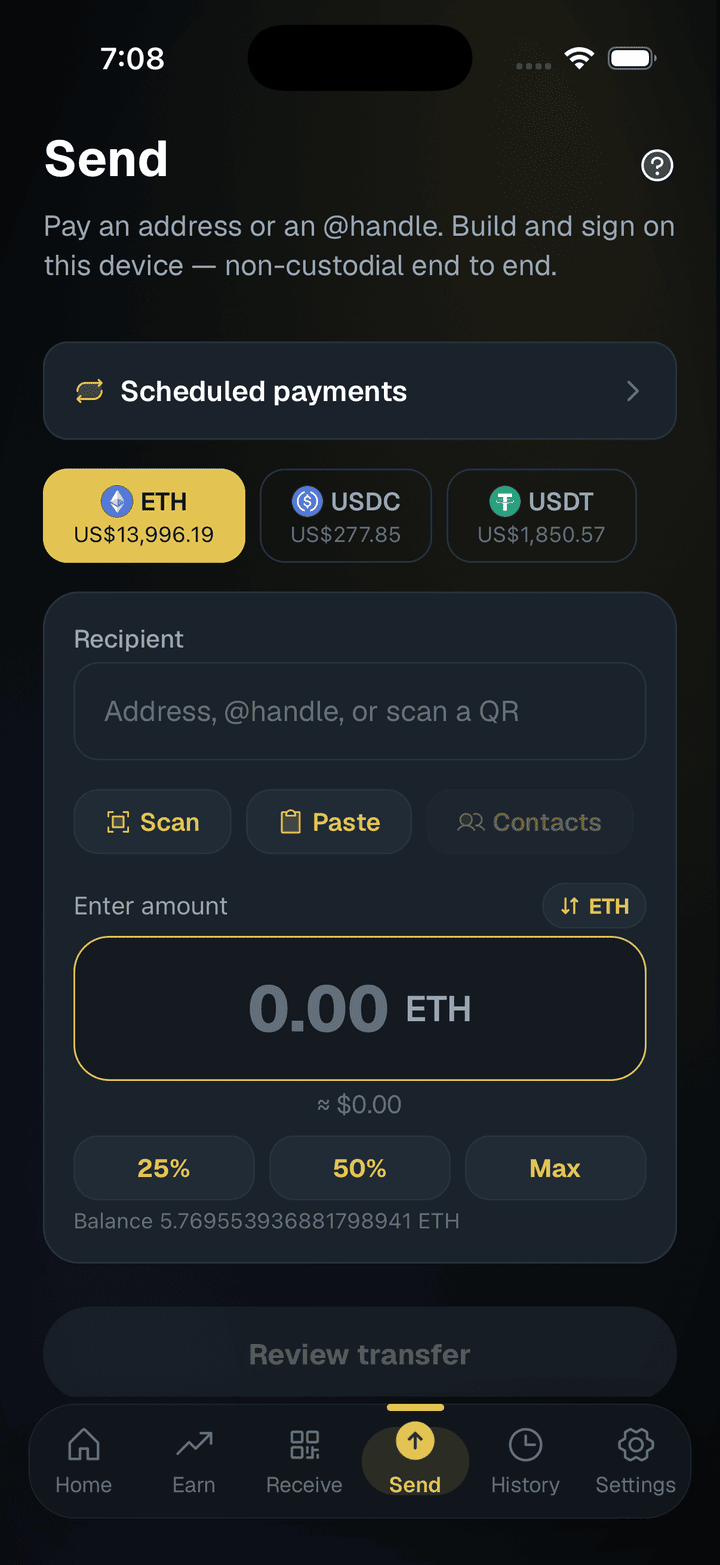
Pick the coin and chain before you send
Send asks which coin to use, then shows the amount and the balance you have on that rail.
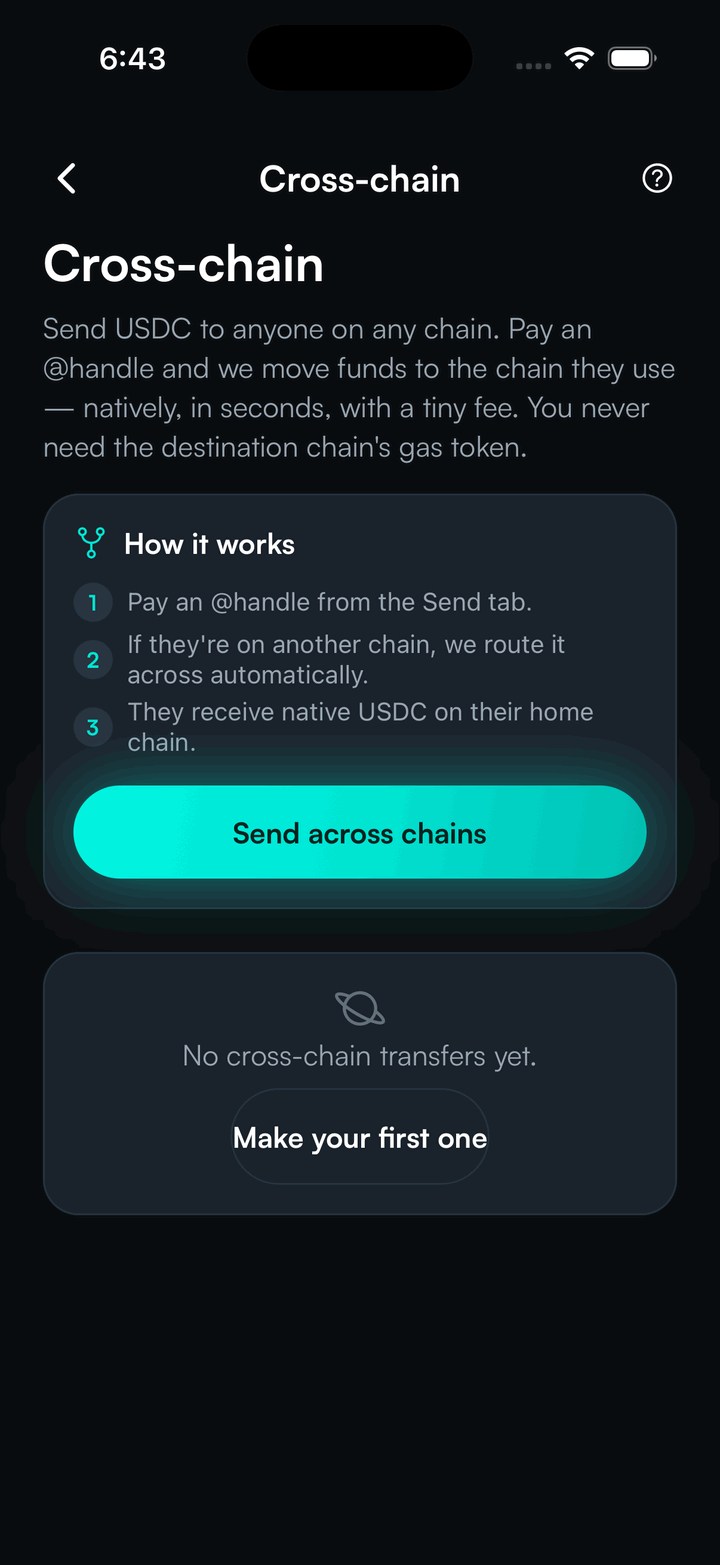
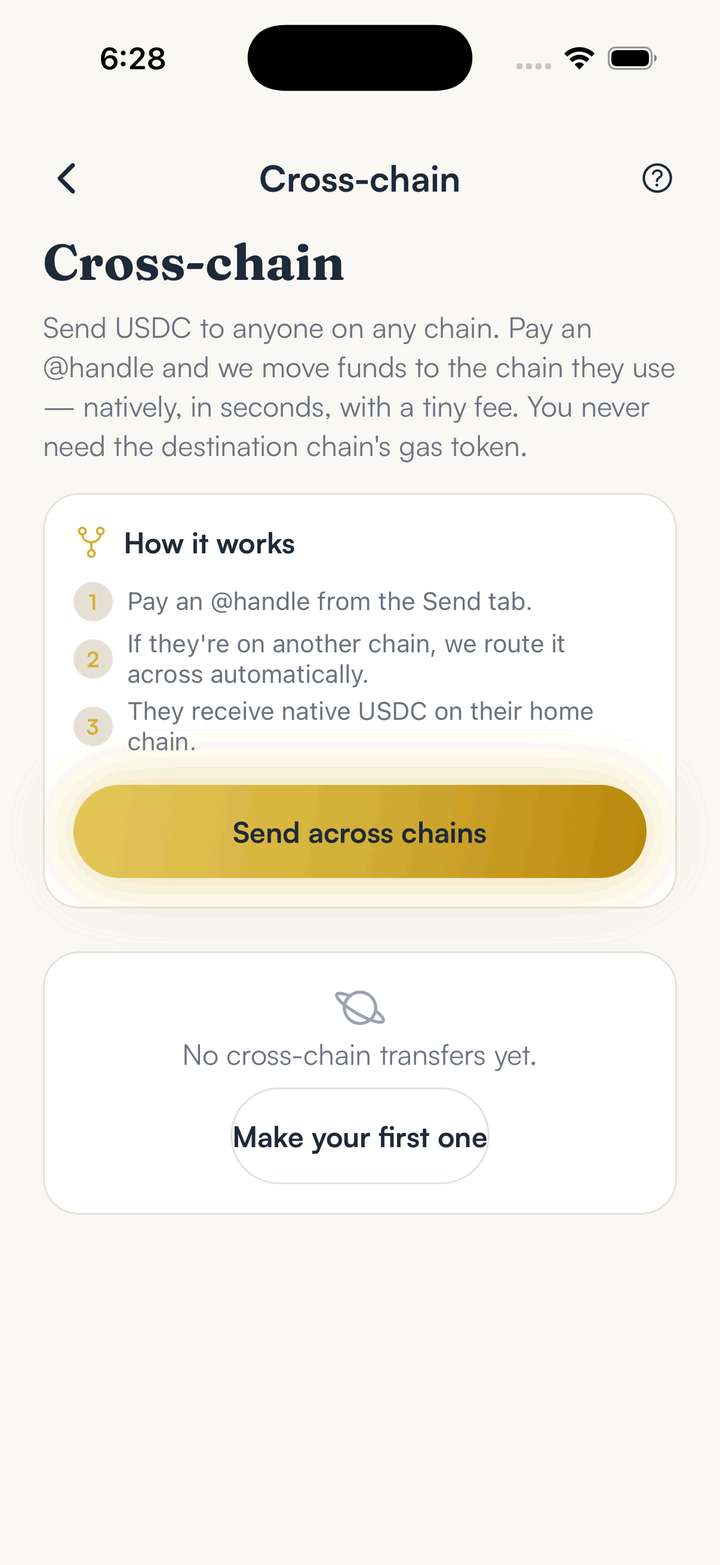
Move USDC across chains
Cross-chain sends native USDC to a @handle on any supported chain.
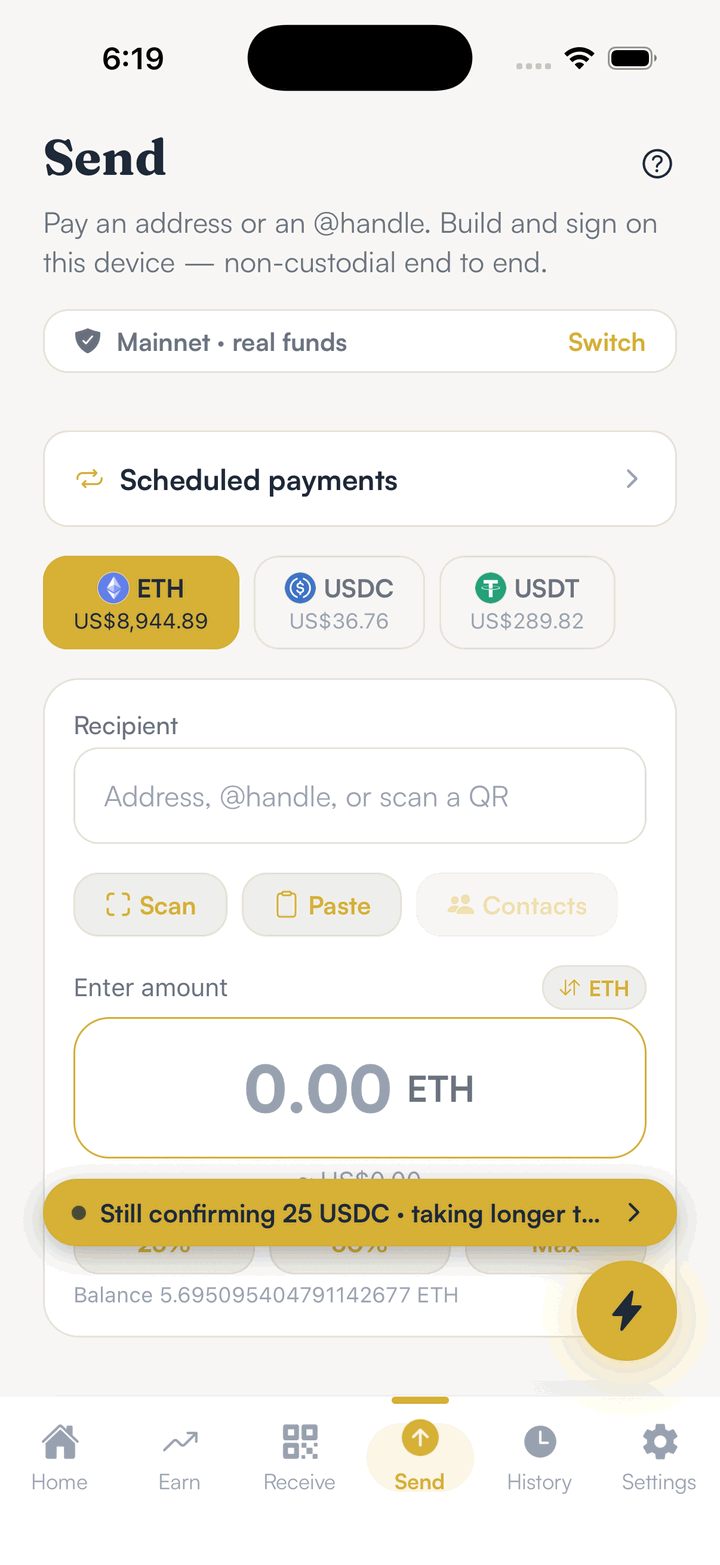
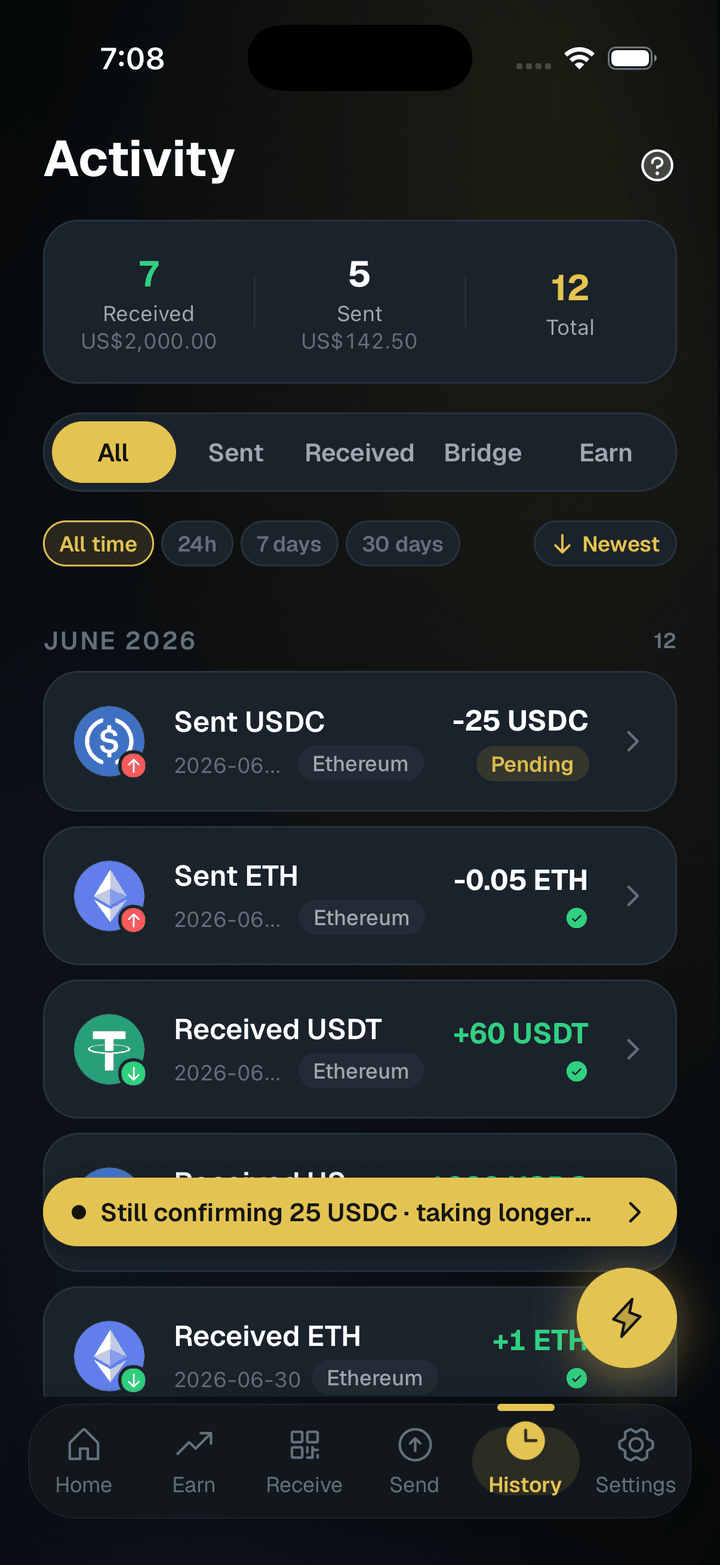
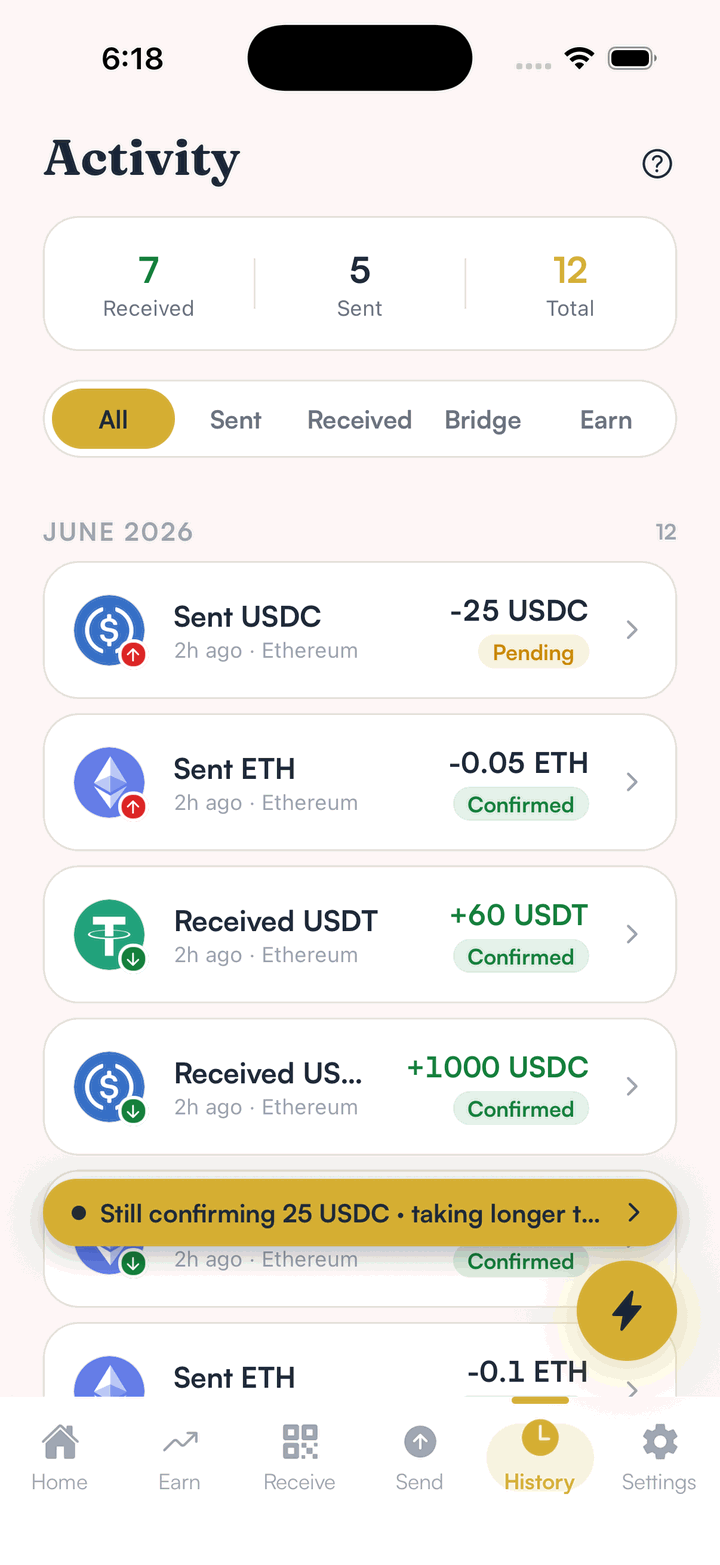
Track it in Activity
Every send and bridge shows its status until it is confirmed.
Hold your own keys, keep the yield, skip the middleman.
SpendTheBits is a fully non-custodial wallet for 13 chains, free on iOS and Android.