
Two issuers, two public profiles
Start with who stands behind each coin. USDC is issued by Circle, and Circle describes it as a digital dollar that is redeemable 1:1 for US dollars [3]. Circle calls USDC the world's largest regulated stablecoin and says it is issued through regulated affiliates, with a list of regulatory authorizations on its policy pages [1]. Those are the issuer's own claims, so check them against the list it links.
Tether's site says all of its tokens are pegged 1-to-1 with a matching fiat currency and backed 100% by Tether's reserves [5]. Its transparency page adds that the net circulation metrics are for transparency only [4]. The copyright line on those pages names Tether Operations, S.A. de C.V., which tells you which entity runs the website you are reading [5].
The wording on the two sites differs. Circle's pages use words like regulated, licensed and Big Four attestation [1][2]. In USDT vs USDC terms, Tether's pages stress that its tokens are backed 100% by Tether's reserves [5]. Neither phrasing is a verdict. If you want a deeper read on one side, our look at whether USDC is safe goes through Circle's claims line by line. Ask what each company is willing to put its name to, and in which document.
Corporate structure also shapes how you can reach each coin. Circle says Circle Mint, its direct 1:1 redemption route, is for exchanges, institutional traders, banks and large financial institutions, and is not open to individuals or small businesses [1]. Everyday users get USDC through exchanges, neobanks and digital wallets [1]. Tether says it only issues new tokens to customers who have passed its strict KYC procedure [5]. So in both cases the issuer deals with large or verified customers directly, and most holders sit one step away from the company behind the coin.
What backs each dollar, as the issuers describe it
For USDT vs USDC reserves, Circle says USDC is backed 100% by cash and cash-equivalent assets [3]. The majority of the reserve sits in the Circle Reserve Fund, an SEC-registered 2a-7 government money market fund, and the rest is held in cash at large banks [2]. Circle also says the fund's portfolio is held in custody at The Bank of New York Mellon and managed by BlackRock [1]. Those named institutions are things a curious holder can look up.
The fund can hold cash, short-dated US Treasuries and overnight Treasury repurchase agreements, which Circle calls commonly used money market assets because of their liquidity [2]. On 15 October 2026 Circle's own page showed 72.5 billion dollars of USDC in circulation [1]. Circle says holdings equal or exceed the amount in circulation [1].
Tether's pages are thinner on composition. They state the 1-to-1 peg and the 100% reserve claim, and they point to a Reports and Reserves tab for the breakdown [4]. The exact asset mix is not spelled out in the text of the pages we reviewed, so we will not describe it. If a reserve split matters to you, open that tab and read the current figures rather than relying on a summary written by someone else, including us.
Auditors are a separate question from reserve managers. Circle says Deloitte and Touche LLP is its independent auditor and has audited its financials since fiscal year 2022, with Grant Thornton LLP in that role from 2015 until then [1]. Circle adds that it has issued reports on all reserve assets since 2018, plus SEC filings in 2021 and 2022 [2]. Keep one point in mind. An audit of a company's financial statements is not the same as the monthly assurance on reserve value, so read each document for what it actually covers.
Reserve reports are different documents, not a scoreboard
This is the part most comparisons blur. Circle says USDC reserve holdings are fully disclosed on a weekly basis, along with mint and burn flows [2]. It adds that a Big Four accounting firm provides monthly third-party assurance that the value of USDC reserves is greater than the amount of USDC in circulation [2]. Circle also says daily independent reporting on the fund portfolio is available through BlackRock [2].
Tether describes its transparency differently. Its page says circulation metrics are typically published daily, and that its reports and reserves are listed on that same page [4]. The page also says those metrics are typically refreshed daily [4]. That is a statement from the issuer, sitting next to circulation data.
So the honest summary is that these are different kinds of disclosure. One pairs weekly holdings with monthly accountant assurance, and the other pairs daily circulation data with reserve reports and a solvency statement. An attestation is not a full audit, and a company statement is not an attestation. Decide which type of evidence you trust more, and note that a report only describes a past moment.
Which chains each coin lives on
Safety is not only about reserves. It is also about where your coin sits when you hold it. Circle says USDC is natively supported on 38 blockchain networks as of 16 September 2026, naming networks such as Ethereum, Base, Solana, Arc, Stellar and the XRPL [1]. Native support matters when you move a coin between chains, as we explain in native vs bridged USDC.
Tether's supported protocols page lists a different set. It names the Ethereum and Avalanche networks, BNB Smart Chain, Celo, Kaia, Tron, Liquid, Solana, Polkadot AssetHub, Tezos, Near, Ton and Aptos for current support [6]. It also says Tether is no longer issuing or obligated to redeem tokens on several legacy chains, including Kusama, Bitcoin Cash SLP, Omni Layer, EOS and Algorand [6]. Chain support can shrink, so check the current list before you send.
Tether adds that its tokens on different blockchains should be treated equally and interchangeably, so one token on one chain equals one on another [6]. In practice the chain you pick decides which apps, fees and risks you face. If you want help choosing a route, our guide on choosing a route for USDT on Tron covers one common case.
A checklist you can run in ten minutes
Here is a practical way to turn all this into a decision. First, open each issuer's transparency page and find the most recent date on the reserve data. Second, note which kind of report you are looking at: weekly holdings, monthly accountant assurance, or a company statement. Third, compare the chain you plan to use with the lists each issuer publishes. Ten minutes of reading beats a day of forum arguments.
Fourth, remember redemption. Circle says Circle Mint, the direct redemption route at one dollar per coin, is for institutions and is not available to individuals or small businesses [1]. Everyday holders usually reach USD through exchanges, neobanks or wallets [1]. That means your daily exit is a third party, so counterparty risk does not vanish just because the reserve report looks tidy.
Fifth, spread the risk if you are unsure. Holding some of each coin means one issuer's trouble does not hit your whole balance. That is a diversification choice, not a prediction. Our guide to self-custody for stablecoins explains how to hold either coin without trusting a platform to keep it for you, which removes one layer of risk from the picture.
Holding both in one self-custodial wallet
If you decide to hold both coins, the practical problem is bookkeeping. Each coin lives on several chains, so balances scatter fast. In the app, USDC and USDT balances aggregate across chains into one number. Your seed phrase and keys stay on your device, and the backend cannot move your funds.
SpendTheBits is a wallet, not an exchange, so it does not decide the USDT vs USDC question for you. It also has no fiat ramp of its own. What it offers is a single view of what you hold, plus the controls around it: the Send screen asks which chain to use before a send, and every recipient is risk-screened before a transfer goes out. Unknown inbound tokens are quarantined, so a fake token cannot pose as a real balance.
The SpendTheBits bridge moves native USDC between chains with Circle CCTP. SpendTheBits charges a small bridge fee, under 1%, shown before the user confirms. For a wider look at what the wallet covers, see which chains and tokens are supported. The reserve homework above is still yours to do, because no wallet can improve an issuer's backing.
In the app · 3 steps
Hold USDC and USDT side by side
Both stablecoins live in the same wallet, on the chains you choose.
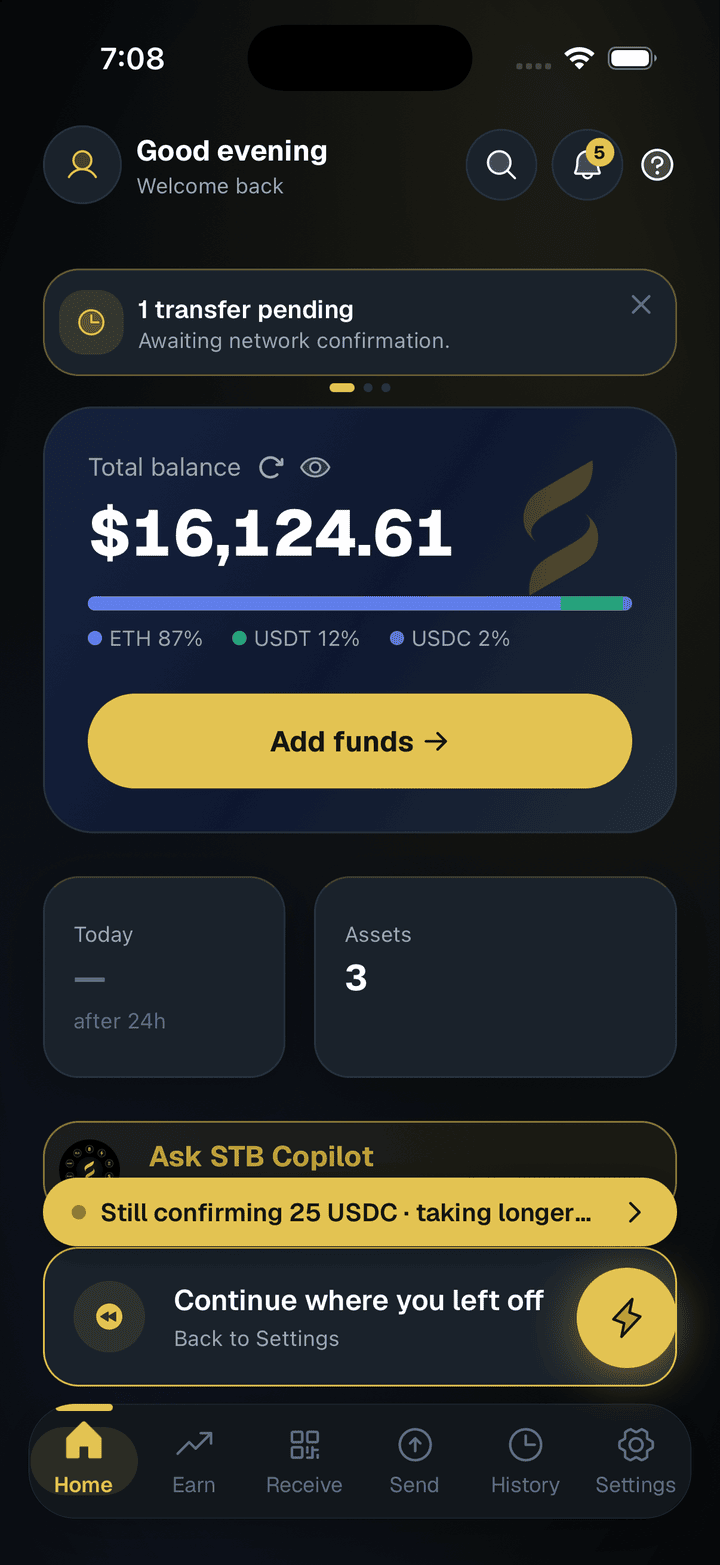
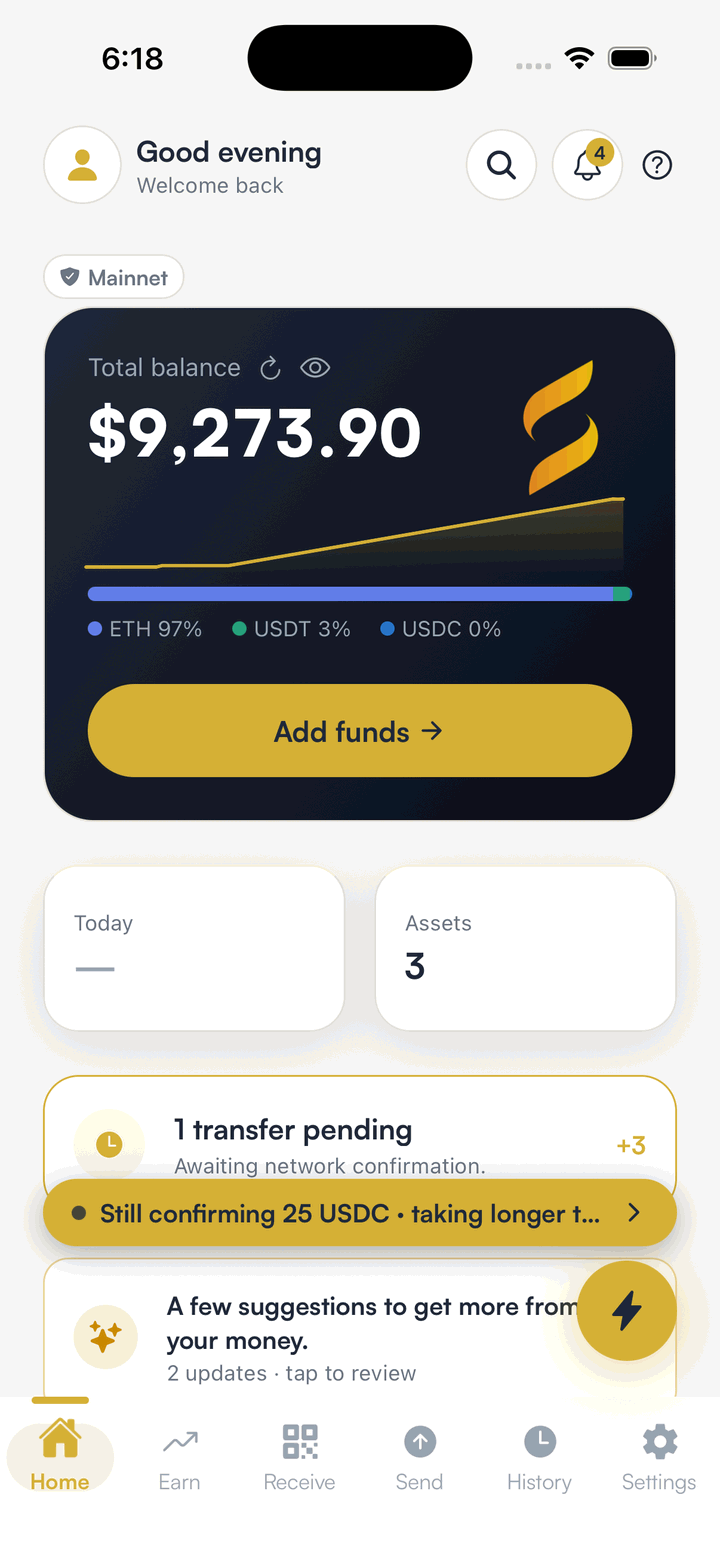
See every balance in one place
Home shows your total balance and how it splits across coins, including USDC and USDT.
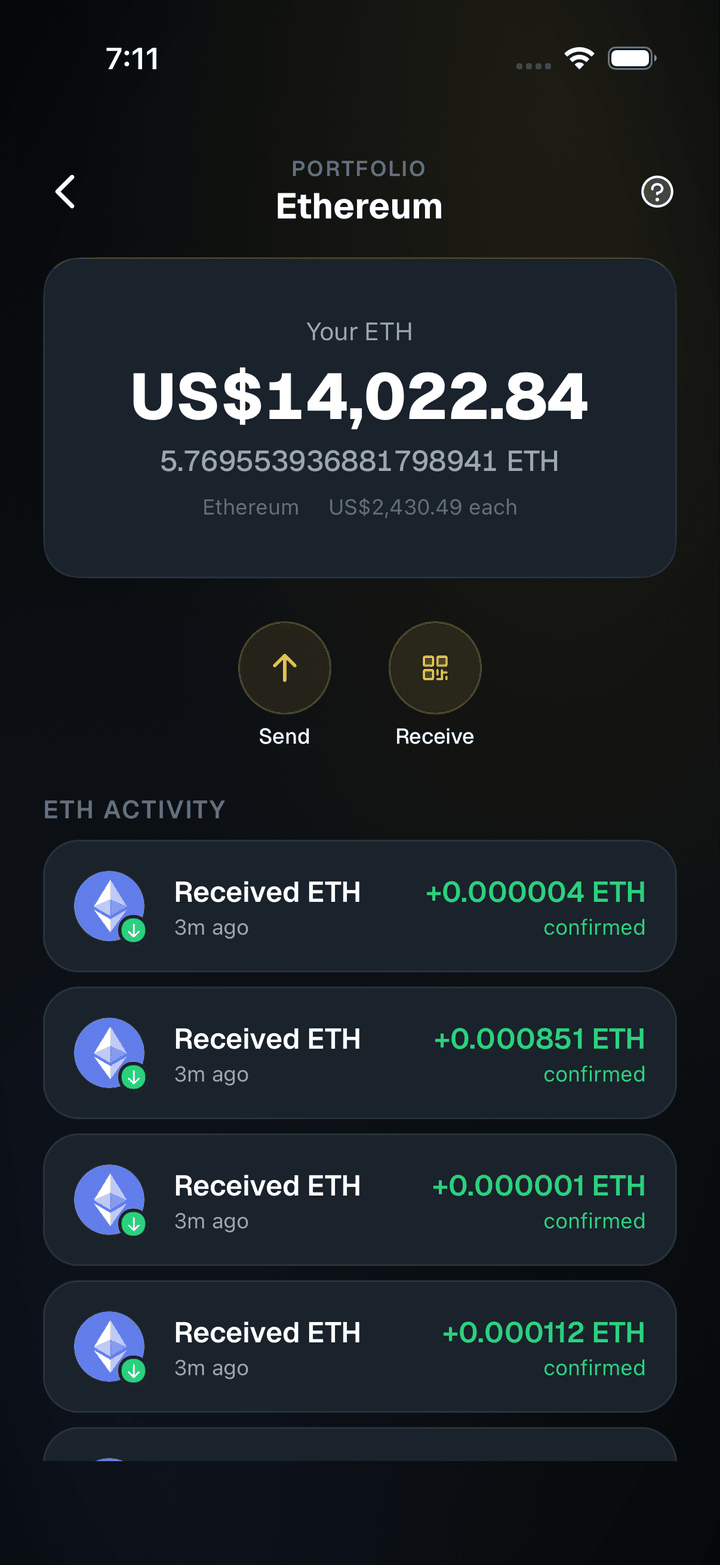
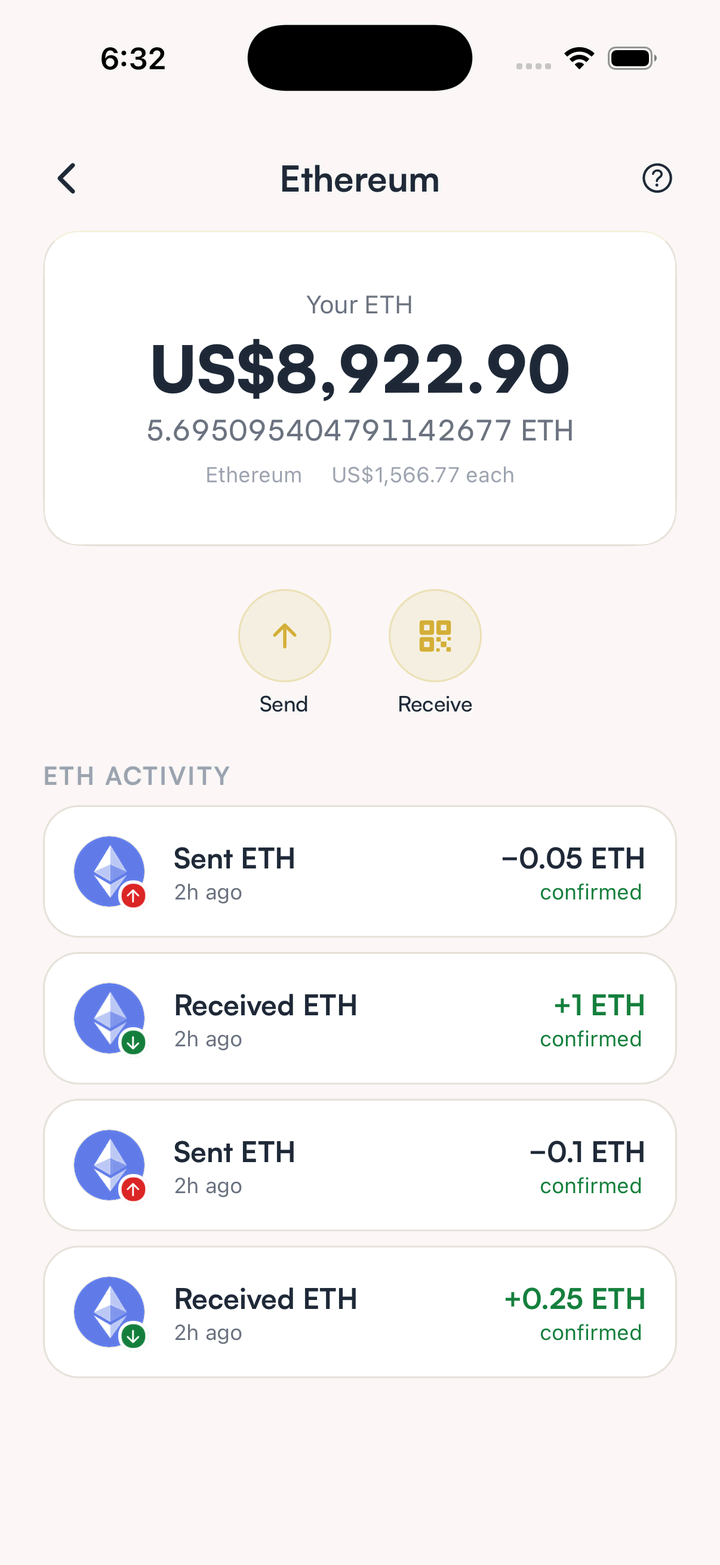
Open a coin to see its activity
Each asset screen lists what came in and went out on that coin.
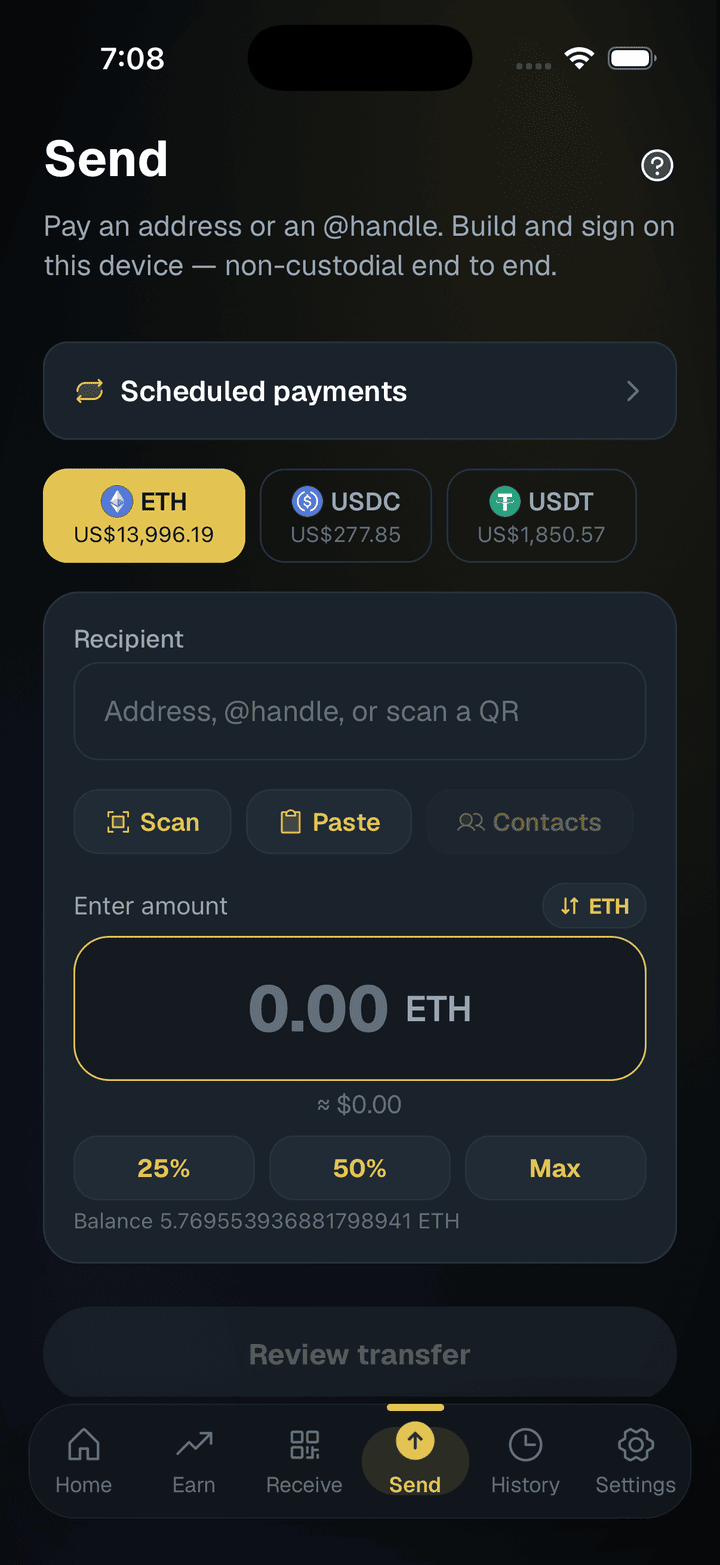
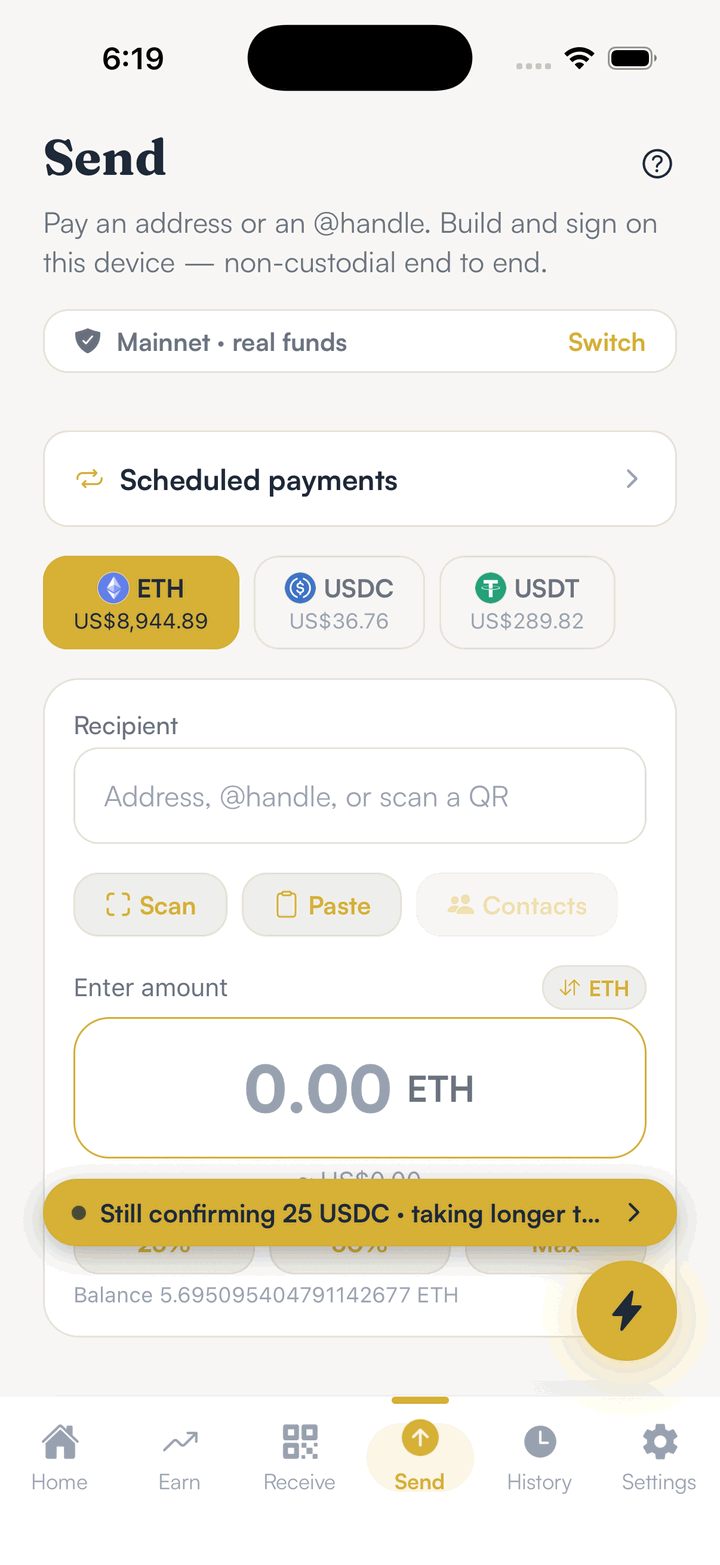
Pick the coin and chain before you send
Send asks which coin to use, then shows the amount and the balance you have on that rail.
Hold your own keys, keep the yield, skip the middleman.
SpendTheBits is a fully non-custodial wallet for 13 chains, free on iOS and Android.